Building bridges between science and industry
Centre of Expertise in Leisure, Tourism & Hospitality

Centres of Expertise (CoE) are public-private partnerships between universities of applied sciences and the professional field, with a distinct focus on societal challenges. Within these centres, investments are made in research, innovation, and lifelong learning. In the domain of leisure, tourism and hospitality, the Netherlands has one CoE: CELTH. This centre works with thematic research agendas under which projects are developed to address urgent issues in the domain. Bringing this knowledge back to the industry is an important task of CELTH, effectively building a bridge between science and industry. Events such as the Industry Day of the World Leisure Congress play a significant role in this knowledge dissemination. In this article, we will describe Dutch tourism policy, the role of CoEs and CELTH in it, CELTH's research agendas, practical implementation in projects, and how this knowledge is returned to the industry.


Anke Arts is interim director at CELTH. Ton Vermeulen is editor-in-chief at NRIT.
Dutch tourism policy
The Netherlands embarked on a major tourism focus change in 2019 with ‘Perspective 2030’. In this widely supported national vision, leisure, tourism and hospitality should contribute to the Netherlands as a popular, valuable and liveable destination in 2030 as well as to solving major social issues that affect the prosperity and well-being of the Dutch population. The Netherlands has been at the forefront of this paradigm shift in the approach towards the sector and the population. However, it has also created new knowledge gaps and left policymakers lacking the necessary tools. As one of the players in implementing this vision, CELTH has established itself as an increasingly relevant research and sparring partner for the sector and its research departments.
What is the Centre of Expertise - CELTH?
There are approximately 50 Centres of Expertise in the Netherlands, which play an important role in research and focus on societal challenges and changes. CELTH is a network organisation that brings experts from the universities of applied sciences in Vlissingen, Breda and Leeuwarden together with national and international industries. With independent practice-oriented research, CELTH aims to contribute to the transformation of the leisure domain towards a socially, economically, and ecologically sustainable future. CELTH studies therefore focus on three overarching themes: conscious destinations, sustainability transitions, and leisure for a better society.

Agenda Conscious Destinations
The core of CELTH's research programming is the Agenda Conscious Destinations (ACD). CELTH has chosen the destination level explicitly because it is at this level that all subsectors and actors come together. A destination is - or should be - created for residents, visitors and entrepreneurs. A conscious destination places the social value of the hospitality domain at its core, aiming to maximise positive economic, social, and ecological impacts - in line with the Triple P values (people, planet, and profit. These impacts are experienced by residents (as their quality of life is directly affected), visitors (in the quality of their experiences), and employees and companies within the hospitality domain (quality of work).
CELTH research and projects focus on three overarching themes: conscious destinations, sustainability transitions, and leisure for a better society.
In the optimisation process that characterises a conscious destination, all of the above impacts and qualities are consciously recognised and acknowledged in design processes, deliberations, and (political) decision-making. CELTH acknowledges that a conscious destination operates within a complex, multi-level context (macro, meso and micro) involving a variety of actors across several domains that develop at different speeds, each with their own agenda. CELTH also recognises that each destination must be approached in a way that is specific to its political, economic, legal, and socio-cultural situation. By developing knowledge that contributes to solving challenges and improving understanding of how destinations function as complete systems, CELTH is able to help them develop into conscious destinations.
Sustainability transitions
Sustainable transitions are a key priority for local, national and international political agendas, as well as for CELTH’s research programme. To further focus on sustainable research, CELTH has developed a Sustainable Research Agenda on Leisure, Tourism & Hospitality. This research agenda identifies the most pressing themes around six key challenges to be addressed by the sector. Most pressing are communication and business models for sustainable products and consumption.
Hospitality transitions
CELTH, together with four partner universities of applied sciences, has launched a booster programme for the sustainable renewal of the overarching hospitality sector. Hospitality transitions as a theme focuses on initiating, facilitating and leveraging targeted collaborations for transition issues in the hospitality domain. Lecturers, researchers and the industry will take the lead in driving systemic innovation and identifying and exploiting sustainable solutions and practical applications. In four regional transition arenas, they will work on themes such as climate neutrality, broad prosperity, a healthy region, and regenerative area development.

Leisure for a better society
The leisure for a better society research programme is all about developing smart, sustainable and people-centred leisure, tourism and hospitality experiences that contribute to major societal challenges. This is essential because the industry is facing major challenges nationally and internationally around climate, energy, housing, digitalisation, mobility, and accessibility.
Leisure can be a testing ground for innovations and the introduction of new solutions on the one hand, and is a prerequisite for the success of other sectors on the other hand. For instance, leisure contributes to the business climate of regions and the happiness of residents. The latter is becoming increasingly relevant as leisure is more and more a determining factor of both individual and collective well-being.
From research agendas to impactful projects
CELTH's research, which focuses on these themes and is accompanied by projects, is developed in close collaboration between researchers and industry. For example, during the launch event of the Conscious Destinations Agenda, knowledge gaps were identified and potential projects addressed, and the sustainable research agenda was based on an extensive consultation process to determine knowledge priorities.
Since then, many projects have been initiated together with the industry that support Dutch tourism policy with knowledge and offer policymakers the right management tools and instruments. Regarding the Conscious Destinations Agenda, this includes, for example, measuring the impact and carrying capacity of a destination, methods for measuring resident benefit and successful interventions for resident involvement, developing interventions for more equitable tourism, and effectively dispersing tourists. Regarding sustainability, we are working on the climate impact on tourism and recreation in the Netherlands, risk analyses due to climate change, and a vision for tourism in a climate-neutral world. Around leisure for a better society, we are working on the role of volunteers, healthy placemaking, and inclusiveness. All these projects are designed, implemented, and evaluated together with the industry.
Building bridges
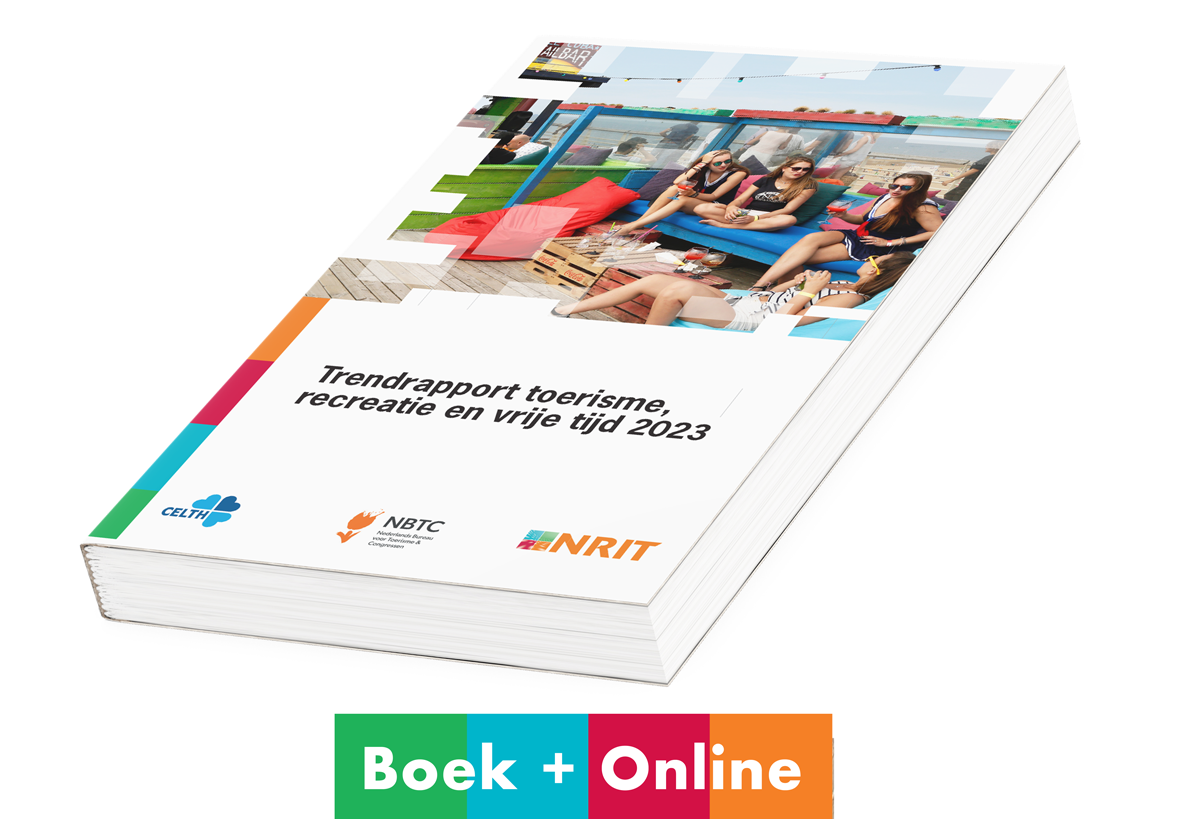
CELTH's output finds its way into articles in academic journals, trade magazines for the industry, and the yearbook for the Dutch leisure sector: Trendrapport toerisme, recreatie en vrije tijd. The output is also widely shared on social media such as LinkedIn, which is a very valuable channel to share knowledge.
Live meetings such as the Industry Day of the World Leisure Congress are also valuable to get in touch with the industry to share knowledge and exchange experiences. CELTH does this at many national and international events, such as the Trend Congress and Tourism Summit, but also at regional conferences attended by many entrepreneurs . During these events, the sector mainly shares and gathers information on applicability.
Summarising
Since the launch of the new national tourism strategy in the Netherlands in 2018, CELTH has been able to make a real contribution to the knowledge base, and we have given stakeholders tools to make that vision a reality. CELTH's knowledge is reflected in education, policy agendas, action plans, and the future strategies of policymakers and entrepreneurs.
Dit artikel is eerder verschenen in Uncover, een uitgave van het domein Leisure & Events van de Breda University of Applied Sciences. Nieuwsgierig naar de andere artikelen uit Uncover? Stuur dan een mailtje naar ton@nrit.nl