Hearing everyone
Designing attractions and measurement instruments for auditory accessibility

Despite the high density of visitor attractions in the Netherlands, many are not (fully) accessible. Where attention is paid to accessibility, the focus is often on technical and operational aspects, and hardly on the experience. This is surprising, as experience is often regarded as leisure’s ‘core product’. While universal design principles can enhance attractions, adapting well-established ones with long-existing facilities is not immediately straightforward. We therefore suggest working with evidence-based (re)developments on the basis of experience measurements that consider all types of visitors to effectively inform design interventions. However, experience measurements have been developed mainly by, for and on people without disabilities. In a research project co-funded by CELTH and leisure industry partners, we aimed to study how these measurement tools can be redeveloped to validly capture the experience of everyone, regardless of the challenges they might have.

Peter Horsten, Marco van Leeuwen, and Wim Strijbosch are lecturers and researchers at Breda University of Applied Sciences. Karin Stiksma is leisure strategist and researcher of Joint Projects.
As a starting point, we chose to focus on a group of people who share one type of disability: people with challenges in the auditory realm. The World Health Organization and the World Bank (2011) estimate that worldwide 124.2 million people have an auditory disability. Hearing loss is considered the most prevalent form of all disabilities, with an increase in hearing loss prevalence expected for the upcoming years (United Nations, 2011). Nevertheless, it appears that there is still little attention for this group of visitors. If leisure providers could redesign their attractions to make their offerings more inclusive for this group, it will make the world a bit better for many people and as such will have a positive impact on both personal, social, societal, and economic levels.

Research design
This article presents the outcomes of the first phase of the project. In this phase, the scientific literature and earlier project work by Joint Projects informed a conceptual framework intended to cover experience elements relevant for people with challenges on the auditory spectrum. This yielded the input for a first draft of a survey: the project’s measurement instrument. Following a transdisciplinary research approach valuing scientific insights just as much as those from practice and experts by experience, researchers of BUas and Joint Projects discussed the outcomes of these efforts with experts by experience with auditory disabilities in order to develop a survey instrument that does justice to the leisure experience of everyone on the spectrum of auditory capabilities. Experts by experience can provide much more detail from their own experiences of being hearing-impaired. Involving them in the project is not only the morally right thing to do, it also helps to filter out any bias based on prejudices or sympathetic feelings from the researchers who do not deal with these disabilities in their own lives.
Having to be on guard and not knowing where noise comes from creates an unpleasant feeling and costs a lot of energy.
Based on the interviews, the conceptual framework (see Figure 1) and associated survey instrument were adjusted to match the interview findings. In a second project phase, this revised survey instrument will be calibrated in a pilot study and triangulated with both in-depth interview data and physiological data (i.e. skin conductance, a measure of emotional agitation) to obtain a picture of the experience that is as complete as possible. In parallel, the survey is offered online to collect insights about experiences from the broader leisure industry. All outcomes will be reported at the WLO Congress in Breda (August 2025). Below, we present some findings from the first phase and its consequences for the measurement instrument we intend to calibrate.

Characterisation of the role of hearing loss
Among our informants, we see a variety of personality types, auditory function levels, attitudes towards their auditory limitation and coping strategies. The group's biggest differences lie in personality and attitudes towards their auditory functioning, ranging from acceptance and pragmatism through various levels of denial to frustration and hostility towards a society perceived as unwelcoming to those with auditory challenges. The greatest similarities we see in a desire for social acknowledgment. This can take different forms. It is often expressed as an outright desire for social connectedness. Yet especially in audio-rich environments this can be physically and emotionally draining due to the need for constant overperformance and compensation. Fundamentally, there is a desire for acknowledgement and understanding from hearing people regarding differing communication needs and the efforts required to navigate in audio-rich contexts.
Leisure behaviour
The informants value leisure in various ways, based on how well available activities meet desired effects like relaxation, social connection, or escapism. Audio-rich activities that our informants enjoy include orderly classical concerts or loud movies at the cinema - but with hearing aids turned off to avoid overstimulation of sound sensitivity. Social activities (parties, going somewhere with one’s family) can be pleasant, if certain conditions are met. Noisy environments (cafés, amusement parks, birthday parties) with many conflicting auditory signals are particularly unpleasant. This tends to lead to selective participation or avoidance of certain activities. Regularly, the net result is that people with auditory challenges lower their expectations about the quality of social interactions. Some participants can accept this; for others, this leads to isolation and loneliness - albeit self-imposed, but interpreted as unavoidable.

Coping
Nevertheless, a desire for social connectedness was found to be an important driver for the leisure behaviour of people with an auditory disability. Compensating the difficulty of understanding in noisy, chaotic environments - trying to lipread, voice-viewing, paying close attention to body language, heightened attention, compensating for others who do not contend with auditory problems - takes a lot of energy, leading to tiredness or frustration. Most informants indicate that they can function in their daily lives at a satisfactory level, as long as people around them are aware of their divergent communication needs. However, they also indicate that they adapt their own behaviour routinely - both in interactions with those who can hear without impairments and in selecting or avoiding certain environments.
In visitor attractions, safety-related information is often auditory. Not being able to hear accurately what is going on when there is a calamity, but noticing that something is happening due to bystanders’ behaviour, or being startled by loud noises while nothing unsafe is happening and feeling on edge as a result are both distressing sensations that cause many experiences in public spaces to be generally unpleasant. Hearing sounds is different from discerning words, which in turn is not the same as grasping or understanding the meaning of the full scope of shared information in time to react in a socially appropriate way. People with auditory challenges can miss out on essential information to understand who says what, where and why, and what is expected next.
Implications
First, the findings confirm that (hearing) efforts and the resultant fatigue are relevant items to include in a survey designed to measure experiences of people with different auditory capacities. Second, the findings indicate the relevance of several other constructs, such as the stance toward one's challenges, the connectedness to one’s immediate social environment and feeling whether one's (hearing) needs are met.
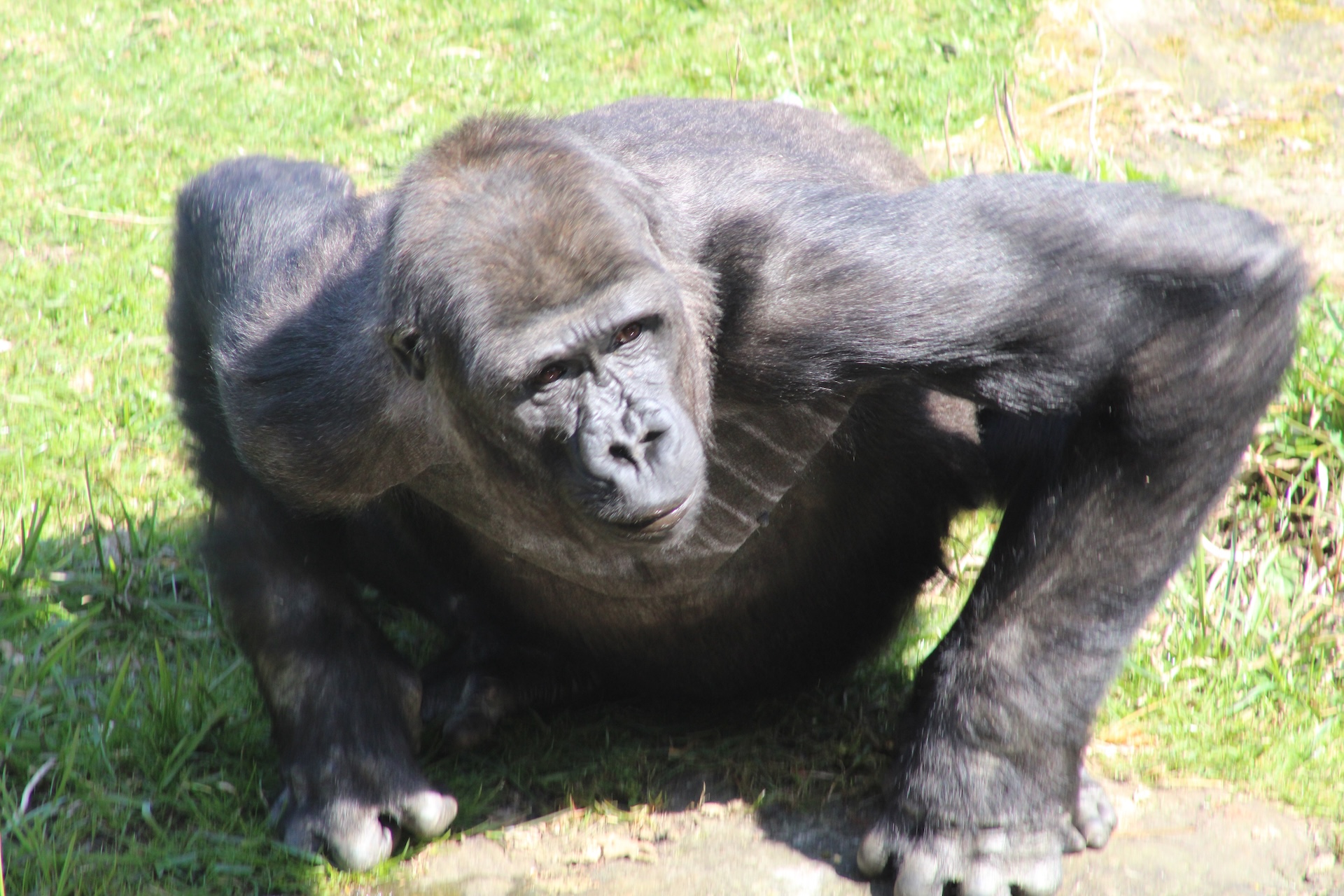
In discussing several options for the calibration phase of the project, informants highlighted the gorilla feeding presentation at Apenheul, a primate-focused zoo in the Netherlands, as a highly suitable case. Other suggestions, such as a motion simulator attraction and a cursed house attraction were indicated by some to be unbearable due to likely balance issues for people with hearing impairments. Enhancing accessibility at zoo attractions, which are already popular visitor attractions among visitors with hearing impairments, would make these places even more inclusive. We look forward to the next phase at Apenheul and the opportunity to present our work at the WLO conference.
This research is funded by the Centre of Expertise Leisure Tourism & Hospitality (CELTH) as part of the ‘Leisure for a better society’ grant. The following sponsors also funded this project (in alphabetical order): BoldMove Nation, Gemeente Berg en Dal, Ginder, Mack Rides, Stichting Apenheul and Vekoma Rides.
Sources
- World Health Organization & World Bank. (2011). World report on disability.
- United Nations. (2011). Disability statistics compendium. United Nations.
Dit artikel is eerder verschenen in Uncover, een uitgave van het domein Leisure & Events van de Breda University of Applied Sciences. Nieuwsgierig naar de andere artikelen uit Uncover? Stuur dan een mailtje naar ton@nrit.nl