Business exists to help people flourish as human beings
Interview with Joe Pine about the rise of the Transformation Economy

Uncover had a conversation about meaningful experiences with internationally recognised business thought leader Joe Pine. He is the (co)author of some best-selling business books about the Experience Economy, authenticity, and customer value. In 2020, he cofounded the World Experiences Organization (WXO). At the moment, he is working on his next book which will be about the Transformation Economy. You can follow and join the process via the Substack platform on https://transformationsbook.substack.com.
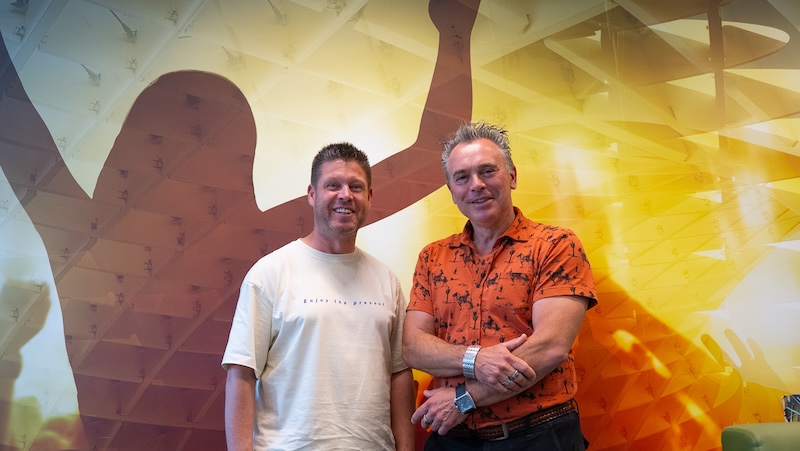
Peter Horsten and Simon de Wijs are the final editors of Uncover.
Uncover had a conversation about meaningful experiences with internationally recognised business thought leader Joe Pine. He is the (co)author of some best-selling business books about the Experience Economy, authenticity, and customer value. In 2020, he cofounded the World Experiences Organization (WXO). At the moment, he is working on his next book which will be about the Transformation Economy. You can follow and join the process via the Substack platform on https://transformationsbook.substack.com.
To kick off, could you give some examples of how and where we are in the movement from the experience economy towards the transformation economy?
We are deep into the experience economy. Experiences are a big part of GDP, employment, growth, innovation, and everything. It’s clear that the students you have today in Breda have grown up in the experience economy, but the transformation economy is actually hot on its heels. Transformations help customers achieve their aspirations and are built on top of experiences and both are closely intertwined. Every experience changes you and any experience has that potential of being a life-changing experience, as we are all the products of our experiences.
A transformation business is any business that, to paraphrase Ben Franklin, helps people be healthy, wealthy and wise. Healthcare is one of the largest sectors of the economy in the developed world. Education and financial firms are huge sectors as well; they each dwarf manufacturing. I avoid the term ‘industry’ for these kinds of companies and use the term ‘spheres’. It is not just about being healthy, but it is about having health and well-being. Well-being is the end to which healthcare is the means. It’s not just about being wealthy, but wealth and prosperity. We can have prosperous lives without being wealthy, but the more wealth we have, the more we can do with that. And it's not just about being wise, but having knowledge and wisdom. Education lets us gain knowledge, with practical wisdom that we can apply in our lives. And finally, the one that Ben Franklin missed, is that we need purpose and meaning to live as human beings. In fact, meaning is at the bottom of Maslow's hierarchy. Even if we have no shelter, no food or clothing, we can survive if we have meaning.
A transformation business is any business that helps people be healthy, wealthy and wise.
Where the spheres of health and well-being, wealth and prosperity, knowledge and wisdom, and purpose and meaning overlap, there is human flourishing (see Model 1).
How does this relate to businesses in this transformation economy?
In my forthcoming book I show that business exists to help people flourish as human beings. People flourish through transformation, by becoming who they aspire to be. With commodities, customers are markets. With goods, customers are users. With services, customers are clients. With experiences, customers are guests. With transformations, customers are aspirants. Businesses need to adapt to this and recognise the diverse aspirations and capacities of individuals. Increasingly, we want companies to assist us with transformations because change is incredibly hard. The better we stage transformations as a distinct economic offering, the more effectively aspirants will transform. They will become who they want to become, who they are meant to be, and thus flourish.

Can you say that leisure is a better fit to aspiration than other sectors?
We only ever transform by the experiences we have, and leisure comprises experiences. Obviously, some types of leisure are going to be more amenable to transformations than others. For example, sports are very transforming, particularly when younger. How we learn comes out of playing. We learn how to compete and how to cooperate. For example, I have an aspiration to get better at golf, I hire new clubs (physical goods ) to make that happen, I hire videos (services) to learn, and I hire a coach (experiences) that spends time with me and helps me get better. But I also go to a company called GolfTEC, which is more explicitly in the transformation business. Its goal is actually to make me hit the ball more like a pro.
Other kinds of leisure activities help us transform. Reading for instance; almost without exception I changed something in my thinking with every book that I read. Or the leisure of being in a park and having time to unwind helps to get out of the normal fast-paced routine, helping to reflect. Reflection is a fundamental element for transformation.
Do you think that the transformation economy is accessible for everybody?
Yes, and it will even be much more beneficial for forgotten groups. Particularly as we bring down the cost of things it will be accessible for the lower socio-economic levels too. Since the Industrial Revolution and the system of mass production, we understand that one of the greatest benefits is that the wealthy develop markets for offerings that later on become mass markets, reaching down to the lower socio-economic levels. Henry Ford figured out how to lower the price of cars so the middle class could afford them. And these cars became second-hand cars that the lower class could afford and so on. That happened good after good after good, and does the same with services, experiences, and transformations.
Think about leisure in the 1800s with Grand Tours where the English elite went into all parts of Europe to see the land over there. Thomas Cook paved the way and started to create tours that the middle class could go on. And now, Ryanair allows anybody for a hundred bucks or less to go anywhere. Or think about the apps that we use, which are better than most personal trainers. There are specific apps to gain good habits and a number of these are very transformational. Nowadays almost everyone, even the poorest people in developing countries, has a smartphone. More and more people are going to figure out how to make an app out of what everybody is doing and aspiring to. And AI will do the rest and customise it for individuals.
Even if we have no shelter, no food or clothing, we can survive if we have meaning.
You seem to be saying that what starts at the top will be aspired to by others and will trickle down. Isn't that also dangerous because it only confirms the status quo or gives power to a small elite to set the agenda of what is a better life?
Certainly, but there isn't any innovation in the world that doesn't involve dangers. So it is good we try to identify what they are. I think what you say is a danger, but I also think that the level of customisation that's possible with technology and AI today helps lessen that danger. The biggest thing in that regard though is that not the rich per se are the top, but it's more the style makers, the ones who determine what's cool in the world, who really have the power.
When discussing immersive technologies, what will the next phase look like? Are there potential downsides we should be aware of?
The ultimate immersion is the Matrix, where you're jacked in and you know it. I see a large focus on immersive experiences as if this is all that we want. My book Infinite Possibility has a framework, the Multiverse, that talks about purely virtual and purely physical experiences at both ends and all experiences in between. The best experiences fuse the real and the virtual. Those include purpose-built places for immersion as opposed to just wearing VR goggles. Reality will now and forever more provide the richest of experiences. It is totally immersive. When I go for a walk in the park or play a game of golf, I am more immersed than in the greatest artificially immersive experience you can point to. I think we'll come to realise that in our 4E model (entertainment, educational, esthetic, escapist realms of experiences) the best, most robust experiences are those that hit the sweet spot, that are (looking at the axes) both absorptive and immersive and both active and passive at the same time (see Model 2).


Do you see a shift in how we perceive the importance of authenticity in an era where the distinction between real and fake is constantly debated? How can we ensure experiences remain authentic?
Especially in times where consumers are increasingly sceptical and struggle between fake and real, authenticity is an important value. There are shifts going on constantly and every shift produces its own countertrend as people respond and disagree. The fact is that we can now fake anything, photographically or video-wise. I'm surprised it hasn't already come to the point of people no longer believing anything. It is a major shift from 50 years ago, where you had video evidence and thought that it must be true. There is going to be a more sceptical eye on things in general. It’s hard to tell the difference between fake and real anymore, particularly as AI gets better and better.
As Jim Gilmore and I pointed out in our book Authenticity, the two big standards of authenticity are being true to self and what you say to be to others. Disney, for example, is a fake reality - not what it says it is, but marvelously true to self. The first time I went to Venice, before our book was going to come out, we had a whole section on the Venice versus The Venetian in Las Vegas. And the upshot of that was that the Venetian is fake, but the real Venice is also artificially kept in the past. The ratio of tourists to residents is much higher in Venice than in Las Vegas. Without tourists Venice would be a ghost town. And yet it can be a wonderful experience to go there because it has this sort of authentic old world charm; it’s a real fake.
In the end, authenticity is personally determined. Two people in the same place at the same time can have different views of how authentic it is based on who they are and what their background is. And what is considered authentic is also changing over time, particularly when virtual reality is becoming a more normal part of life.
The rise of the experience and leisure economies parallels globalisation, allowing us to explore both physical and virtual spaces. However, there's also a trend towards local and smaller initiatives, like the 15-minute city. What does this mean for the experience and transformation economies?
I don't think it means that much at a macro-economic level. You will just have more smaller experiences within 15 minutes of walking or driving. What often happens is that both the local stuff and the spectacular stuff will become paramount and the stuff in between is in danger and gets squeezed out. More local and smaller maybe even increases the power of the spectacle. This is the case for things like the Sphere in Las Vegas, which are so good and distinctive (and expensive). The big thing is that people love being with other people. As opposed to watching sports on TV, places like the Sphere allow you to feel surrounded by other people. And the number of people when you go beyond 15 minutes is a lot! So those spectacular events with a lot of people are very expensive and will become even more important if they become less frequent.
I also think that the focus on the local isn’t a new thing. It is part of the human condition. Many people like nothing better than being back in their familiar surroundings where they have the routines they go through. But without ever leaving these familiar surroundings you don't appreciate it. It is the experiences you have elsewhere that allow you to appreciate the routines you have locally.
You shared a publication about transporting experiences, which seem like escapism similar to LARP parties, but also connected to religion and mystical elements. Are these transporting experiences becoming more important than just a means to escape?
There is a shift in society towards wanting more of those experiences. The normal brings merely memorable experiences and you want something more that makes a difference. You see the rise of spirituality, which is often made up stuff as opposed to real religion. It is like a drug where you need more of a dose of drugs to get the same high. Plus, companies are better at creating transporting experiences than they used to and the availability of them is higher, and so the value is greater and more people will want to have them.
Businesses need to recognise the diverse aspirations and capacities of individuals and to adapt to this.
As the world becomes more complex, this transformation economy might lead to feelings of inadequacy?
Alvin Toffler wrote the book Future Shock describing this situation in 1970. He's basically saying the future is coming so fast it's causing a shockwave. Whatever he wrote about is now a million times more, and for the larger part we have handled it. It's not an issue of the human brain or inability to handle it, for most of us anyway. But the more that comes at us and the faster it comes, the number of people that can’t handle it will grow.
This issue has been around for a long time. You can make the same statement when Gutenberg (15th century) invented the printing press and people said we can't handle all this information. With the orders of magnitude more information being created today, we mostly manage to handle it and adapt. Leonardo da Vinci basically knew almost everything that was going on in the world in terms of technology and so forth. That is not possible today, which means we need let things go and do what we can. This is difficult with our fear of missing out, which applies not just to experiences but to everything that's going on in the world.
Young people today have the chance to become wealthier, healthier, and wiser, but many struggle with mental health issues. Could the imbalance between skills and challenges be a problem?
Not sure to what extent, but I'd have to say yes. One of the things I see is that a lot of the anxiety and depression in young people’s lives today is not just because of the government becoming what we call a ‘nanny state’, but also because of parents and the way we raise kids differently today. Everything has to be programmed out. You have to know exactly where your kids are. There's not a minute of the day that isn't on the schedule. There's no free time anymore. I think there's a lot of blame that goes straight on parents. I do think social media is also a large part of the problem of why we have more anxiety and depression today among young people. We compare ourselves to the ideal figures of others and our daily reality doesn't compare. In my opinion, there are many societal problems that business reflects more than it creates and tries to help solve the problems rather than create them, while it is society that creates these problems today.
Which ethical considerations should we keep in mind for the future?
There is an ethical issue with transformations, anytime you muck around inside of people. And thus there is a fiduciary responsibility of business for individuals and society. This term we use for banks and financial advisors, meaning that you have to be loyal to customer needs above your own. You don't do things solely to make money; you have to do things on behalf of the client. So there's this fiduciary responsibility for transformation guidance where you have to do what is best for them, even if it means you make less money.
Another ethical issue is particularly around responsibility for the places you visit. That you are not harming the flourishing of communities and people when you are amongst them. What I hope in the next 15 to 25 years is that businesses embrace the notion that their raison d'être, their reason of existence, is human flourishing. And if they embrace that notion, you don't have to command and control your people. You don't have to have as many regulations. If we get the mindset in business to change and to think long-term rather than short-term, then we've got a chance of being much less of a problem in that regard.
Do you already see some good examples where this is happening?
You can see the rise of B-corp as a way of working and you also see the rise of companies that explicitly have a meaningful purpose. A specific example is the transformational travel movement. Here it’s not just a focus on the traveller but also on the people at destinations. Central to it is being a force of good for destinations and not just for travellers. Look at the Progression of Economic Value through travel, showing all five levels of economic value.
Travel was originally about going to land where land is the commodity of travel. Then people started building hotels and so forth. Then they started adding services and amenities. And then it became all about the experiences, on how it's time well spent. This is where it really goes beyond just having a place to stay, but the entire experience of a destination. And finally transformational travel that can change your life while you're there.
There isn't any innovation in the world that doesn't involve dangers.
Imagine stepping into 20 or 30 years from now, what could be the next big shift in the leisure industries?
Charging admission for non-business experiences, such as visiting Venice, will become more explicit. This shift, already seen in tourist and hotel taxes, aims to sustain communities and counteract overtourism. Admission fees can balance visitor numbers and generate investment funds. We're already seeing the beginnings of this trend.
I also think that in 30 years we will be much deeper into the transformation economy and people will not have so much serendipity with their leisure experiences. People will be more consciously busy with an overall life programme and the things they need to have to be able to become what they want to become.
Lastly, I do believe there will be much more leisure time. People feel like they are time crunched, but they have more time for leisure today than they have ever had in the entire history of the world. And we will even have more time in the future as AI and other technologies will take over part of our work.
Dit artikel is eerder verschenen in Uncover, een uitgave van het domein Leisure & Events van de Breda University of Applied Sciences. Nieuwsgierig naar de andere artikelen uit Uncover? Stuur dan een mailtje naar ton@nrit.nl
Photography
- Rod Evans
- Hans Gerritsen