Exploring the dynamics of Canada’s World Leisure Centers of Excellence
Fostering global connections through education

The World Leisure Organization (WLO) has two Centers of Excellence (WLCE) in Canada, each with distinct settings and dynamics: one in Nanaimo, British Columbia, on Canada’s west coast, and the other in Trois-Rivières, Québec, in Eastern Canada. A key difference between the two centers is their language. The WLCE at Vancouver Island University attracts students from English-speaking Canada and global regions, including India, Iran, China, Mexico, and Vietnam. The WLCE at Université du Québec à Trois-Rivières offers the only French-speaking graduate leisure studies programs and thus attracts local and international students from Francophile regions. This linguistic distinction significantly influences their respective international partnerships.
Aggie Weighill is director of the World Leisure Center of Excellence at Vancouver Island University.
Marc Andre Lavigne is co-director of the World Leisure Center of Excellence at Université du Québec à Trois-Rivières.
Internationalization of Leisure in Western Canada
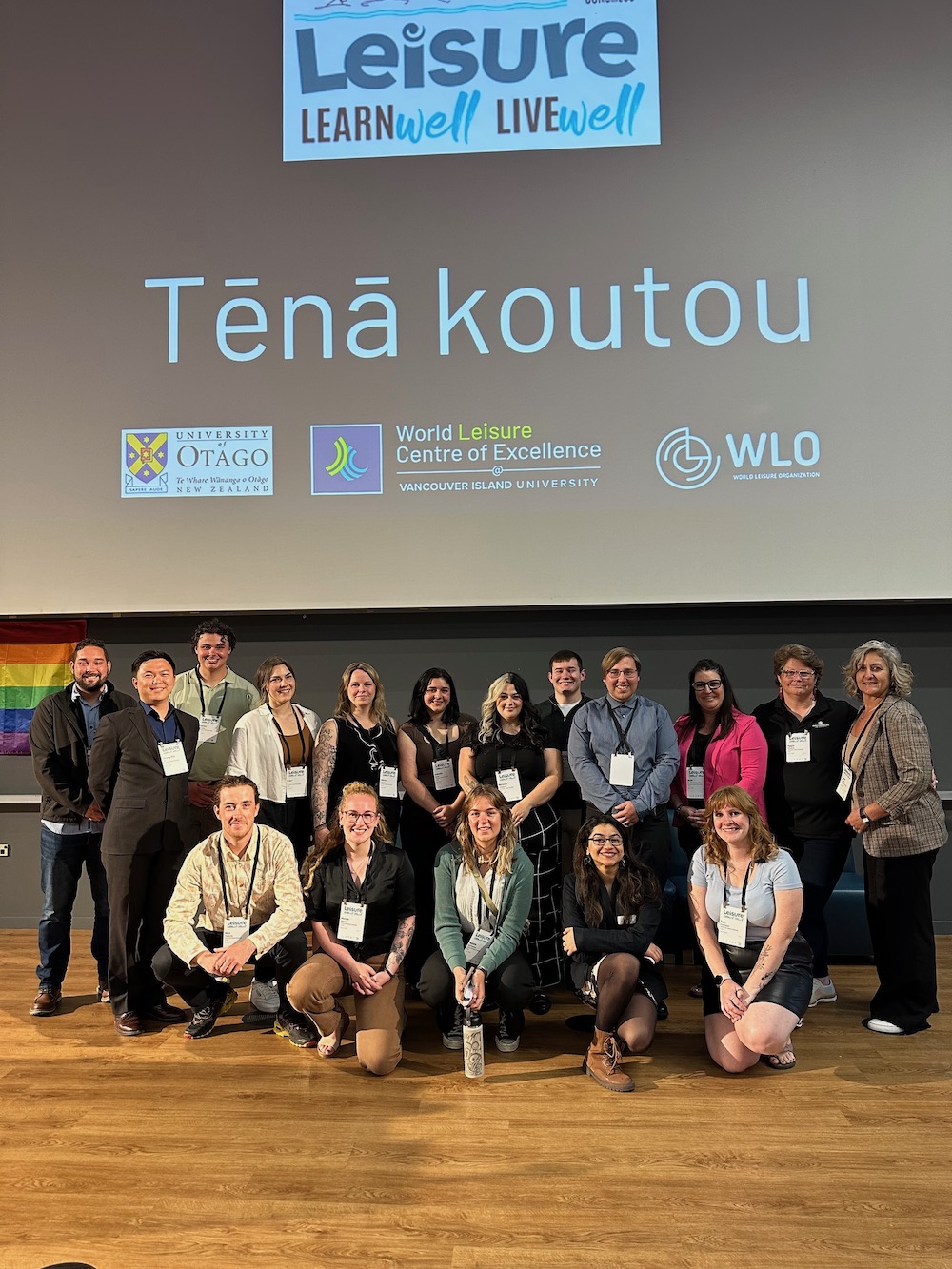
At the WLCE at Vancouver Island University (WLCE@VIU), we focus on attracting graduate students from diverse countries and exploring how leisure, in all its forms, can contribute to society's health and well-being. We strive to achieve internationalization and global relevance by introducing students to the unique blend of Indigenous and settler ways of knowing, leisure pursuits, and perspectives on sustainability. Master of Arts in Sustainable Leisure Management (MASLM) students are encouraged to explore the meanings of leisure within their own cultures, Canadian culture, and global society while also seeking ways of harnessing the power of leisure for positive change.
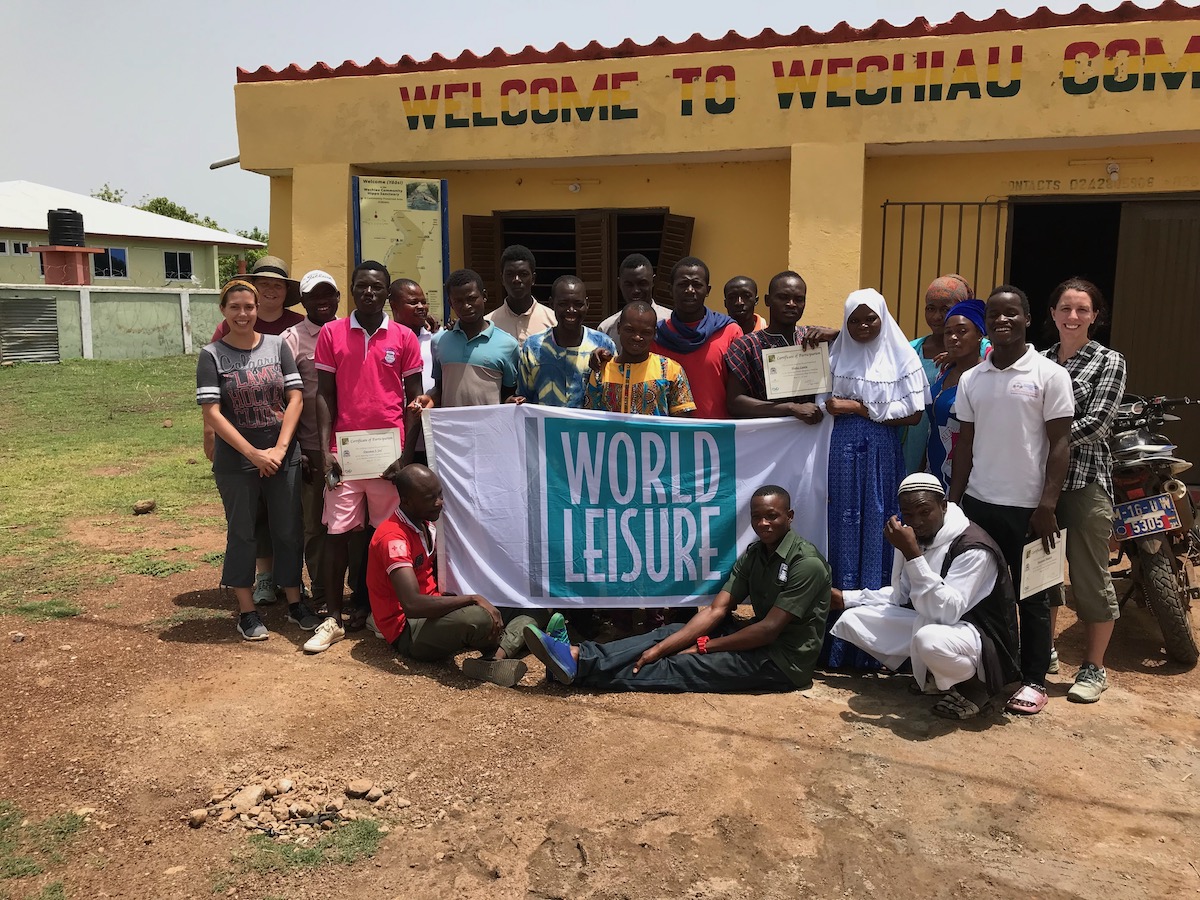
Internationalization within its programming is achieved through experiential fieldwork and international field schools. The WLCE@VIU has actively participated in the University of the Arctic’s Northern Tourism program, which has afforded several students the opportunity to participate in multinational polar tourism field schools in the Yukon Territory of Canada and Norway. Before 2020, the WLCE@VIU delivered an annual field school in Ghana, West Africa, and the team has actively engaged in the World Leisure Congress field schools in the USA, South Africa, Brazil, and New Zealand.
Internationalization within the British Columbian/western Canadian post-secondary context is impacted by several issues similar to those of the WLCE at Trois-Rivières. A lack of funding and increasing education and housing costs have resulted in financial challenges to student mobility. While there may be government funding for Canadian students to travel abroad, the increased cost and the necessity for students to work during their studies has resulted in a limited pool of those willing or able to travel. There are also limited funds to attract international students to smaller universities like VIU, and those offered generally do not fully cover the cost of living and school.
A key difference between the two centers is their language and this linguistic distinction significantly influences their respective international partnerships.
There is a need to address the barriers of neo-liberal capitalistic perspectives on post-secondary funding and student mobility. The value of the WLCE@VIU is, in large part, derived from its mandate to develop and use international networks and partnerships, which focus on specific projects and funding for international research, development, and mobility. Through these opportunities, WLCE@VIU-affiliated professors and students have formed enduring relationships and engaged in projects in Ghana, Tanzania, and Japan. Through the WLCE Network, we continue to focus on internationalization by hosting visiting scholars, participating in World Leisure Day Activities, and engaging in global debates and panels.
Internationalization of Leisure in the Francophone World
At the World Leisure Center of Excellence in Trois-Rivières, our focus extends to fostering relationships with France, West Coast Africa, Haiti, and, to a lesser extent, the Maghreb countries, Belgium, Switzerland, and other Francophile regions. A significant portion of the students in our master's and doctoral programs hails from these countries, enriching our debates and exchanges with diverse perspectives. We also have student mobility programs, especially for undergraduate students, primarily in collaboration with European institutes.
The challenges of internationalization parallel those of cultivating a scientific community in leisure studies, a field surprisingly underdeveloped or unrecognized in the Francophone world. While leisure is studied, dedicated programs or institutional structures for its development are rare. Our challenge is to identify common threads and denominators while learning from one another. A broad definition of leisure, encompassing tourism, sports, culture, and outdoor activities, helps in finding shared interests essential for developing international projects.
This fosters a relationship of mutual influence between countries and researchers, involving the exchange of best practices and co-construction of knowledge that often challenges foundational concepts in our field. One concrete example is an upcoming initiative between our Center of Excellence and a partner university in Lebanon, scheduled for fall 2024. Our Lebanese colleagues recognize that leisure can strengthen social ties and revitalize communities, yet their models and approaches differ from ours. This collaboration will allow us to test Canadian-developed models in a vastly different context, including communities marked by conflict, different institutional and civil configurations, and complex political dynamics.
A challenge that the network encounters is the presence of tariff barriers and insufficient investment in student mobility.
There is also a desire to work more closely with governments of French-speaking countries to exchange policies and to share what works and what does not in their programs. Decision-makers in our sector are curious about what is being done elsewhere to address climate change, promote active living or cultural activities, and ensure better access to leisure opportunities. Non-profit organizations in our sector also seek international partners to engage in dialogue with their peers elsewhere in the world, to be inspired and to strategically monitor new trends.
The contribution of the World Leisure Centers of Excellence network
The primary contribution of the network is to initiate the dynamics of knowledge sharing. Although language barriers pose a challenge for many, the network facilitates connections, supports student and faculty mobility projects, enables co-supervision of theses, and facilitates collaborative research endeavors. It is worth noting that the concept of leisure itself is ambiguous, and its interpretation can vary significantly depending on the defining institutions. By bringing together diverse perspectives, the network encourages nuanced discussions, and challenges preconceived notions.
Challenges
In this context, where facilitating exchanges and mobility projects is crucial, one challenge that the network - and universities in general - encounters is the presence of tariff barriers and insufficient investment in student mobility. International students are often viewed as a lucrative revenue source for governments and educational institutes, leading to higher tuition fees and restrictive admission quotas. The lack of adequate resources to support student mobility, both inbound and outbound, can deter international collaborative projects, as students and researchers may face difficulties travelling to participate in joint initiatives. The World Leisure Organization is certainly limited in its actions for this global and often complex challenge. Still, it allows, among other things, through its network of Centers of Excellence, to maintain a presence in several countries and to connect potential partners.