The future of education is Glocal
How to transform classrooms into learning communities

In our quest to shape education that resonates with the contemporary global world while being sensitive to local culture and context, it is fundamental to look at the integration of international and intercultural dimensions into both formal and informal curricula. Glocal education aims to prepare our students to address complex issues by understanding global ones in different ways of knowing. For that to happen you must foster collaborative and participatory work, engaging a variety of social actors. The international and intercultural approach is highlighted here as it provides contextual diversity and plural solutions for societal challenges. Within this article, I aim to delineate two concepts that have been guiding my work as a learning facilitator in the transformation of classrooms into vibrant learning communities: glocalisation and the pluriverse. These concepts diverge from dominant narratives of globalised development where the focus is on universals. Instead, they present alternative world views and practices that envision an ecologically responsible and socially just global community.
Celiane Camargo-Borges works for Academy for Leisure & Events and Academy for Tourism at BUas and she is part of the Sustainability Transitions research team.
Glocalisation emerged as a response to the homogenising forces of globalisation, urging us to view our planet as interconnected yet distinct in its local contexts. This perspective invites us to address global issues such as sustainability, climate change, and economic inequality with sensitivity to diverse historical, cultural, economic, and social circumstances.
The Pluriverse draws from indigenous relational worldviews, emphasising the interconnectedness of multiple worlds—human, natural, and spiritual—coexisting in time and space. This world view challenges the hegemony of a singular universal reality, acknowledging the diverse ways in which reality is constructed through intersubjective practices and ontologies.
By integrating these concepts, we redesign conventional classrooms and the paradigm of knowledge transfer methodologies, investing more in the creation of ‘communities of learning’. Through collaborative projects and partnerships with international partners, particularly from the Global South, I am experimenting with new educational approaches, aligning them with global realities and connecting students with all sorts of social actors to create learning opportunities. Central to the concept of a ‘learning community’ is the promotion of international collaborations, intercultural communication, and cultural sensitivity among students. This holistic approach not only cultivates cultural competence but also nurtures empathy and a deeper understanding of diverse perspectives, fostering genuine engagement with the pluriverse, inviting students to understand and celebrate diversity. Below, I share two illustrations of projects transforming Glocalisation and the Pluriverse into action.
Project 1: Ancestral World Views Strengthening Sustainability
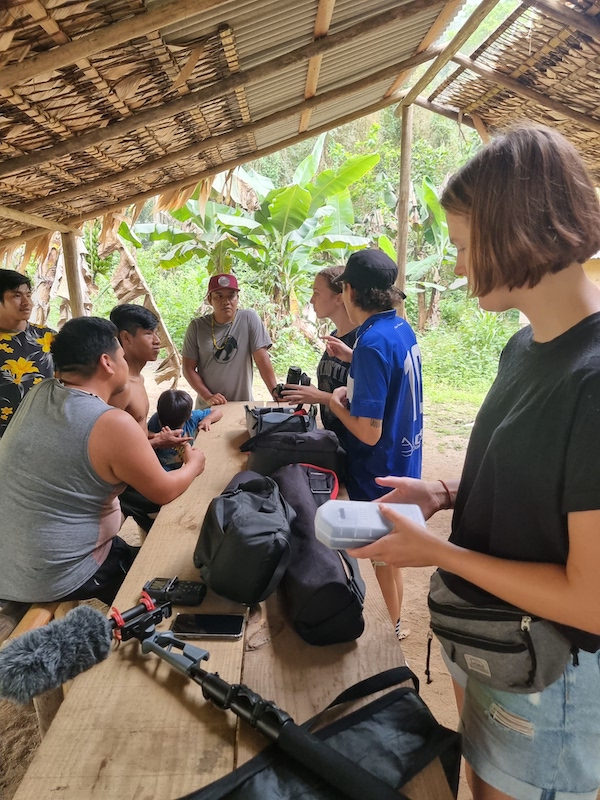
The Bocaina Project in Brazil is an ongoing initiative and a collaboration between BUas, the Observatory of Sustainable and Healthy Territories (OTSS), and the Forum of Traditional Communities in Brazil. Together, we delve into the intricate relationship between people, nature, and culture and how different types of knowledge might contribute to the design of innovative projects, strengthening the communities, generating meaningful experiences to visitors and creating impact. Over the course of two years, our team has engaged closely with the traditional communities of Bocaina, professionals, teachers as well as the local students from the Brazilian Universities. Our BUas students have the opportunity of interacting and learning from local knowledge as well as the ancestral knowledge of the indigenous, quilombolas and caiçaras communities. This engagement has culminated in the production of a documentary that captures the profound insights and practices of these communities in living harmoniously with nature. The documentary serves not only as a capture of their wisdom but also as a catalyst for broader conversations on sustainability and holistic living. One of the highlights of this project is the collaborative approach taken during its development. Students from diverse academic backgrounds, including Brazilian students and teachers, have been integral to the process.
This is no different for the organisation of the documentary premiere event. We are bringing together a learning community comprising students, academics, and community members designing the event. Our students, from different academies, have weekly meetings to discuss and organise the event. They are from Leisure Events (two); Creative Business (two); Performatory (two) and Tourism (one). Together they designed a platform for sharing progress, exchanging ideas, and co-designing the premiere event for the documentary. In addition to working on their field, learning new content, they also learn how to work as a team and how to deal with complex topics as this event is not merely about showcasing the documentary; it is a celebration of cultural richness, environmental stewardship, and collaborative learning. This is a continuous flow of learning by doing, creating a project, reflecting, and envisioning new steps for the continuation of the project. Through this project, students gain not only content knowledge but also intercultural proficiency, an international mindset, and the ability to work in interdisciplinary teams, enriching their educational experience. I am sharing an illustration (see text box 1) here from a written exchange with a student. Radina Shikova shared with me her learning process and highlighted how these collaborative spaces served as a rich, experiential learning environment. Radina Shikova's reflections emphasise the transformative power of these collaborative spaces, highlighting how a common purpose, respectful engagement, and an inclusive environment can inspire confidence and creativity.
Text box 1: Collaborative spaces boosting confidence and learning
Radina Shikova: "Hi Celiane. I hope you are doing well. First, I just wanted to let you know that I really enjoyed the creative session on Wednesday. I am usually not very good with groups of people I don't know too well and it is hard for me to speak up, but the girls are so amazing and it was so easy to brainstorm with them. I was surprised myself how well we got along immediately, so I genuinely look forward to the next sessions (I rarely say this, and even more rarely actually believe it).”
Myself: "Hello. Happy to hear. As a researcher studying the design of spaces where transformative learning can happen, I would like to know a bit more about your experience with the group: 1. Can you say more about "we got along immediately"? What were the elements that made you get along with the group? 2. What happened that created this experience? 3. Can you think of actions that contributed to that?”
Radina Shikova: "I'd love to tell you more. It makes me happy that you're interested to know.
- What I mean is that there was this common purpose that we all had, which sort of pushed away all other (unnecessary and distracting) topics. For me personally, especially in diverse groups including professionals or just very knowledgeable individuals - it's a confidence issue which I believe I have nothing important to say about, or nothing to add when I know someone else in the group knows much more than myself. This was not the case on Wednesday. I felt confident to voice my ideas and sometimes even disagreement freely with my peers.
- I think the reason why it worked so well is that the rest of the group probably share the exact same feeling as me. We all had this relaxed but at the same time focused attitude and realised that the desired result was possible through collaboration and exchange of various ideas. Even when we had differing opinions, we were invited to collectively compromise and reach a consensus.
I think it was a combination of common purpose, relaxed and respectful attitude, physical engagement as well (we had to get up and write our values on the whiteboard), no time pressure and last but not least - the space itself. I really liked the room we were in, it wasn't a typical lecture/presentation room; it felt cozy.”
Furthermore, partnering with communities deeply rooted in ancestral wisdom has also been a transformative journey for all of us. Their ethos of 'Bem Viver' - living well in harmony with nature - resonates deeply with our efforts towards sustainability. The insights gained from this collaboration have given learning elements to the students and also invited them to rethink lifestyles for a more sustainable planet.
In conclusion, the learning spaces created by the Bocaina Project have proven invaluable for students, offering a unique blend of international, intercultural engagement and cross-academy experiences in learning. These environments have also enabled students to interact directly with ancestral knowledge and diverse cultural practices, fostering a deeper understanding of sustainability and holistic living. Through active participation in documentary production and event organisation, students have gained confidence, teamwork skills, and a sense of global responsibility. The supportive and inclusive atmosphere has encouraged open dialogue, creativity, and mutual respect, making these learning experiences not only educational but also transformative in shaping students' perspectives on sustainability and community collaboration.
Project 2: Empowering Local Solutions
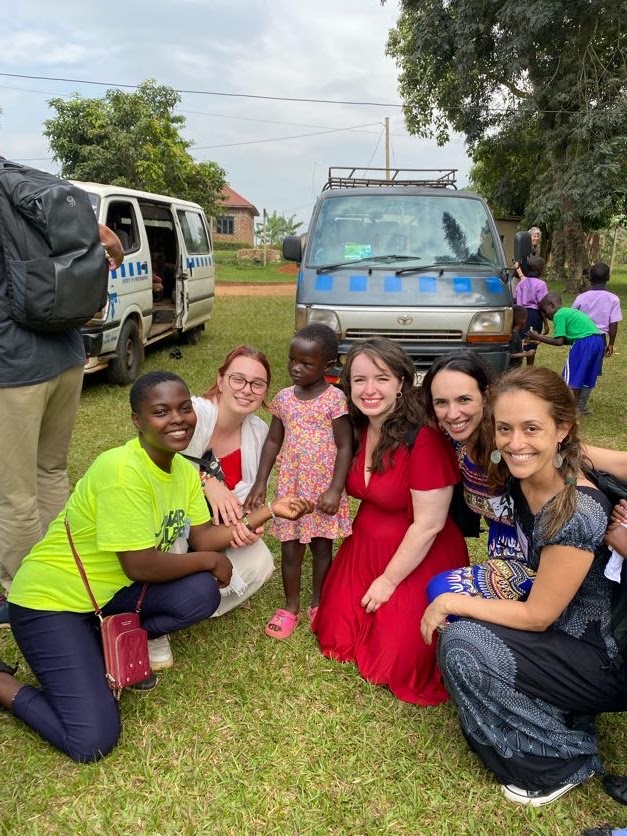
In collaboration with Hope For Youth Uganda, a rural school NGO in Uganda, and the American non-profit organisation called Team Together, we embarked on a journey to collaborate with local communities in the rural school. This initiative was established with the Performatory and aimed at fostering social entrepreneurship and innovative community-driven solutions. Our partnership with the rural school in Uganda began with a virtual collaboration, where Performatory students worked closely with a collective of students from the We Matter Girls, a girls’ club to empower students and to invest in training skills. Together, they designed social entrepreneurship projects aligned with the school's values and community needs.
This virtual collaboration laid the groundwork for a deeper engagement, culminating in a transformative learning journey in Uganda. In August 2023, professionals from diverse backgrounds, including the two students from Performatory and international partners, immersed themselves in the Ugandan way of life. The immersive experience facilitated collective engagement, transformative growth, and the co-designing of solutions to local challenges. Central to this initiative was the concept of ‘setting the stage’ for collective action. Performatory students, together with the girls’ club, designed the ‘setting the stage’, applying their Performatory learnings into this very specific context. Through collaborative workshops, they cultivated a sense of belonging, trust, and shared purpose. The opportunity to work with the NGO for six months and then to be in Uganda contributed to the transition from learning to action, empowering students to make tangible contributions to the community. The two-week learning journey was not just about acquiring knowledge but also about experiencing the pluriverse first-hand. Diverse perspectives, cultural practices, and ways of thinking converged, creating a dynamic learning community focused on social innovation and cross-cultural understanding.
These projects exemplify the transformative potential of international collaboration, cultural sensitivity, and knowledge co-creation. By embracing glocalisation and the pluriverse, we foster a learning environment that transcends traditional classrooms, empowering students to become proactive agents of change in a globally interconnected world.
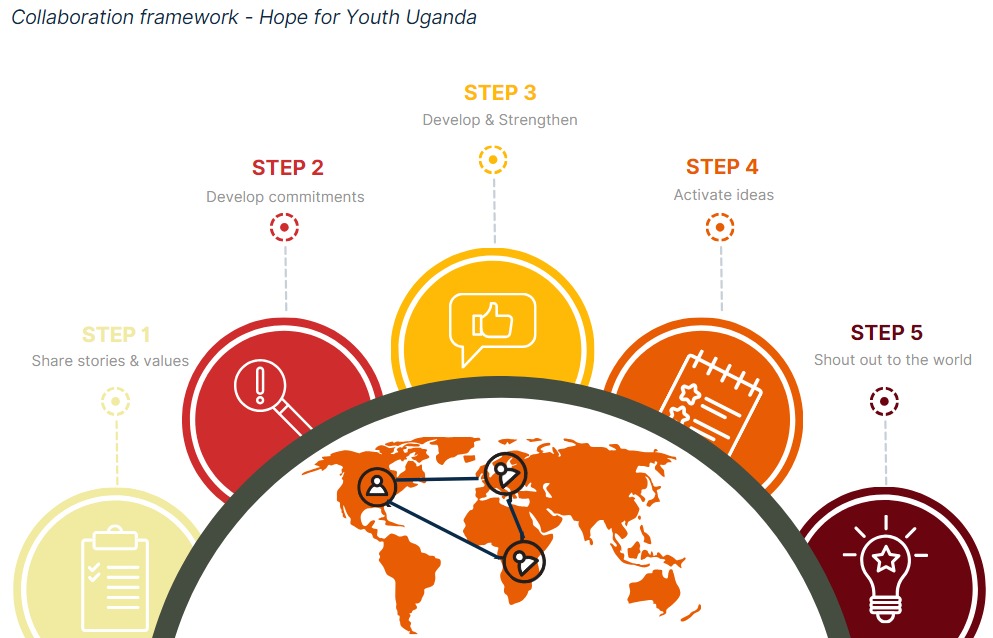
Here I am also giving an illustration of a student from Performatory, Elena B?lt?re?u (see text box 2), who has been involved in this project from the beginning and accompanied us on our trip to Uganda. In her testimonial, you can learn about the framework she created by systematising her learning journey. This framework not only helped her better understand the learning process but also became a valuable guideline for future projects.
Text box 2: Student reflections on the Uganda Project
"Working on the Uganda project has been an eye-opening and transformative journey as I immersed myself in a completely new and different culture from my own. Understanding and acknowledging that our perceptions of reality are uniquely shaped by our experiences, relationships, and societal influences added the most to my development. Through this learning journey, I've exercised to step back, pause, ask curious questions and reframe my assumptions. The shift from a mindset of charity to one of collaboration and from short solutions to creating lasting impact has even become a practice for me. As part of my learning I have developed a collaboration framework that could be useful to other professionals. It starts with 1. Share stories and values - understand and appreciate each other’s values; learn about each other through stories; 2. Develop commitments - develop a shared ambition, create guidelines for intercultural collaboration; 3. Develop & strengthen - Move forward with the trust and empathy, aligning stakeholders, strengthening relationships; 4. Activate the ideas - explore synergies within the community, develop intercollaborative projects that support the shared ambition; 5. Shout out to the world - systematising best practices.” (Elena B?lt?re?u)
Conclusion
These projects have served as a living lab for me, where, together with students and colleagues, I embrace philosophical concepts in practice. This article focuses on Glocalisation and the Pluriverse; these frameworks offer insights and practices for developing a curriculum aligned with the ethos of BUas Plus. We advocate education that goes beyond classrooms, engages students, encourages diversity of perspectives, and allows them to co-create their own learning processes in collaboration with communities and organisations. I believe these learning spaces can contribute to activating other concepts that are essential for future-proof education.