Bonding and bridging in third places
The importance of meeting like-minded and others

You find yourself in your favorite hangout: an environment you are comfortable with, surrounded by people you might not know, but give you a feeling of being welcome. You order a cup of coffee, look around, read a magazine, and hear the murmur of your co-visitors. Yes, this place really feels fine.
Olaf Ernst is coordinator of the specialization Urban life & placemaking at the Academy for Leisure & Events, Breda University of Applied Sciences.
Marisa de Brito is a senior researcher Placemaking and Events at the Academy for Leisure & Events, Breda University of Applied Sciences.
The importance of ‘third places’
The significance of such meeting places, where people can gather in an informal setting, has been popularized by Ray Oldenburg (1989). He is an urban sociologist, who argues that places such as cafes or parks are essential for communities and the quality of their neighborhoods. These third places exist in addition to home (‘first place’) and workplace/school (‘second place’). According to Oldenburg, third places have characteristics, such as being obligation-free places with the potential to level social status as people engage in carefree conversations with a playful mood, and where people can be themselves. Socializing and sense of belonging, also in this kind of locations, is a basic human need, of which we were painfully reminded during the restrictions caused by the covid-19 pandemic. During the pandemic, with many third places closed due to (partial) lockdowns, people longed to be outside of their homes, using more than ever the public space. The pandemic underlined the importance of human contact, and thereby the importance of meeting places. As we pick up life where we left it, it is appropriate to revisit the significance of third places. Additionally, we can ask ourselves: what is actually the meaning of third places for a neighborhood and its communities?
The pandemic underlined the importance of human contact, and thereby the importance of meeting places.
Coolhaveneiland: diversity in people and places
To find this out we chose Coolhaveneiland in Rotterdam as an example. It is, as the Dutch name says, an island, and for a long time this was also the reputation it had in the city: an inward-looking neighborhood, where non-inhabitants did not have any reason to go to. This changed the last years, side by side with major developments going on in Rotterdam: Coolhaveneiland opened up and shows signals of upgrading, without being yet completely gentrified. The area still has a mix of housing types and residents, ranging from autochthone Dutch and ethnic inhabitants to students and young international professionals.
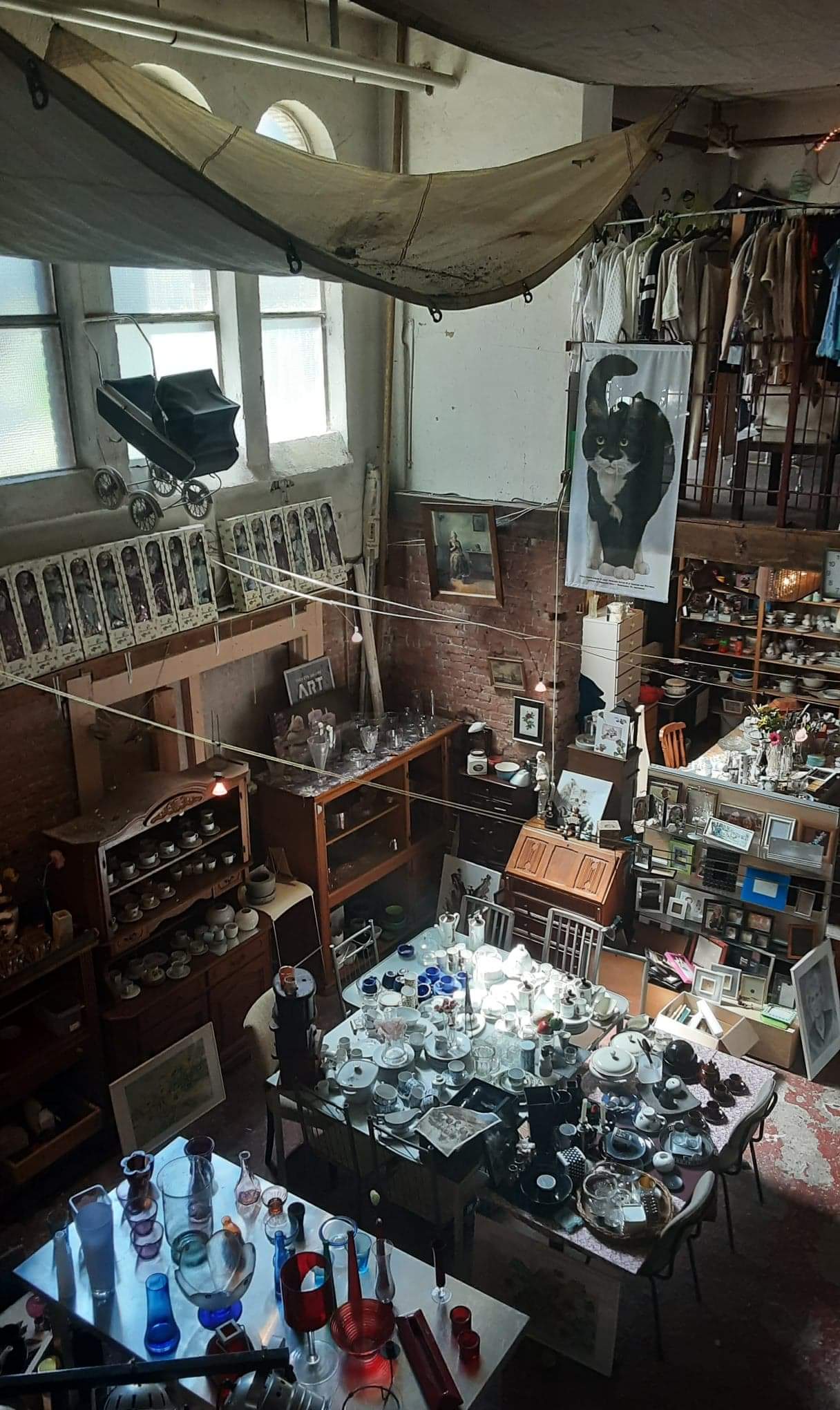
With such a diverse population and changes going on, it is no surprise the offer of third places is equally diverse. One can find a typical Dutch pub (‘brown café’), a neighborhood garden, a thrift shop which functions as a meeting place for inhabitants and a more established community center. The question is: what is the meaning of all these places according to their managers or owners?
For everybody or just for a specific group?
To find out, we visited several places and held conversations with those responsible. They all saw their places as an important spot in the neighborhood: either because ‘it is one of the few green areas in the area’, ‘a place where people from Coolhaveneiland can get support’ or simply ‘because this is the only pub in the wide environment where they play this kind of Dutch music’. This last example is striking as it is a place which caters for a clientele that is not linked to the neighborhood, but attracts people from further away. Most of the other third places are focused on the immediate surroundings and say they are open for everybody. However, when digging a bit deeper, this leads to other insights. Yes, there are specific groups that visit those places, and yes they can be described quite clearly. This is even the case for the communal garden, where there is an ‘overrepresentation of white, highly-educated people’. So, it looks like these third places offer something for specific groups and, essentially, they are separate entities, meaning the offer in this neighborhood reflects the diversity of its inhabitants. However, the visitors seem, at first, to stick to their own bubbles. But is that really the case?
Being open to the unknown
What is clear is that a shared interest always helps interaction. Especially in the pub this is a driving force and really connects people, who come to drink beer, talk about the latest gossip, or in our example enjoy the kind of music that is being played. When we look at the thrift shop or the community center this is less the case, but you certainly meet others, sometimes with a bit of help of the people working there. As the representative of the community center says: ‘oh yes, I often bring people in contact with each other. Just by offering them a coffee at the same time, start a conversation and walk away, so they can continue talking’. This is what Putnam (2000) calls bonding and bridging, where the first is about establishing a link with someone based on shared interests, the latter stands for bringing different groups together, and let them establish a link.
Visitors seem, at first, to stick to their own bubbles.
Bridging also has to do with being open to newcomers, also one of the elements Oldenburg includes in his definition of third places. That is sometimes complicated, as the Coolhaveneiland-case shows. In the case of the local pub the owner has a camera system built in behind his bar which gives him the opportunity to keep the door closed for unwanted, potential visitors, who he can profile based on outlook. As a result, he claims the pub ‘is a safe place where nothing bad happens’. More subtle interventions are done by the owner of a creative hub who takes clients, ‘not having the right vibe’, outside and start a friendly conversation. In contrast, there are places that attempt to be open to all, but which does not always work in practice. For instance, Muslim women seem to not enter the community center if a male is working there, which makes it difficult for the organizers, as they want to be open to all.
At the same time, there are initiatives where groups are willing to help ‘the other’. The same pub owner who profiles visitors, did set up an action for Ukrainian refugees staying nearby the neighborhood by collecting clothes and food and by mobilizing other parties, such as the clothing bank, which is housed in the same street. This shows also the ‘village-like’ character of the neighborhood and the solidarity these places represent.
The role of the neighborhood
In general, in the conversations we had in the meeting places one can see a mixture of ‘can do’-mentality, pride of the neighborhood and with that, also involvement. But there is also a sentiment of an area in transition after a long period of being neglected and on its own. And with this, the meeting places on the island also need to find their position (again).
Bonding is about establishing a link with someone based on shared interests, while bridging stands for bringing different groups together.
Third places can have a vital role in being open to the residents or newcomers of an area they are located, even if as the above shows it may not always be that straightforward. In addition, this hugely depends on both the willingness and capacities of the owners and the developments in the neighborhood as a whole and the effect this has on the specific meeting place. Therefore, it is paramount that stakeholders keep bridging the dialogue on how to develop an inclusive neighborhood.
Sources:
- Oldenburg, Ray (1989). The Great Good Place: Cafes, Coffee Shops, Community Centers, Beauty Parlors, General Stores, Bars, Hangouts, and How They Get You Through the Day. New York: Paragon House. ISBN 978-1-55778-110-9.
- Putnam, Robert (2000). Bowling alone: the Collapse and Revival of American community. New York: Simon & Schuster Ltd. EAN 9780743203043