How can we make leisure more accessible to people with mild intellectual disabilities?
Six intercultural, inclusive projects in the leisure industry

The 2022-2025 BUas+ Strategy states that the ‘intercultural classroom’ is BUas’ standard learning environment. In the last few years, groups of students of Academy for Leisure & Events have actively put aims from this strategy in practice already, by conducting surveys in museums, attraction parks, and among people taking city tours together with experiential experts of LFB (interest group for and by people with intellectual disabilities). Collaborating in these projects with people with disabilities perfectly meets the strategic aims and objectives of BUas that students work on "industry-relevant, high-quality, and innovative research and design” in "small-scale, personal, sustainable, diverse, and inclusive learning environments”. Accessibility innovations in the leisure sector are desperately needed, and equivalent cooperation with people with disabilities is perceived an example of "on-campus curricular intercultural collaboration”. In this way, the BUas students develop "skills that empower them to contribute to shaping a better world”. This article addresses important concerns from six projects.
Peter Horsten, Marco van Leeuwen, Bart Stadhouders are lecturers and researchers at Academy for Leisure & Events.
Museums
ALE students conducted inclusive studies at Het Markiezenhof (Bergen op Zoom) and the Maczek Memorial (Breda).
Alignment with the reference framework
Experiential experts indicate they are interested in history, but demonstrate particular involvement in stories from the Second World War. Earlier periods (for example, the Middle Ages) evoke insufficient associations, mainly due to the limited focus of their history classes in secondary school, which did not go back further than World War II. Their personal interest in that war is such that they started their own research into how people with disabilities were treated at the time, which allowed the conversations with the Maczek guides to be deepened.
Interaction, but in small doses
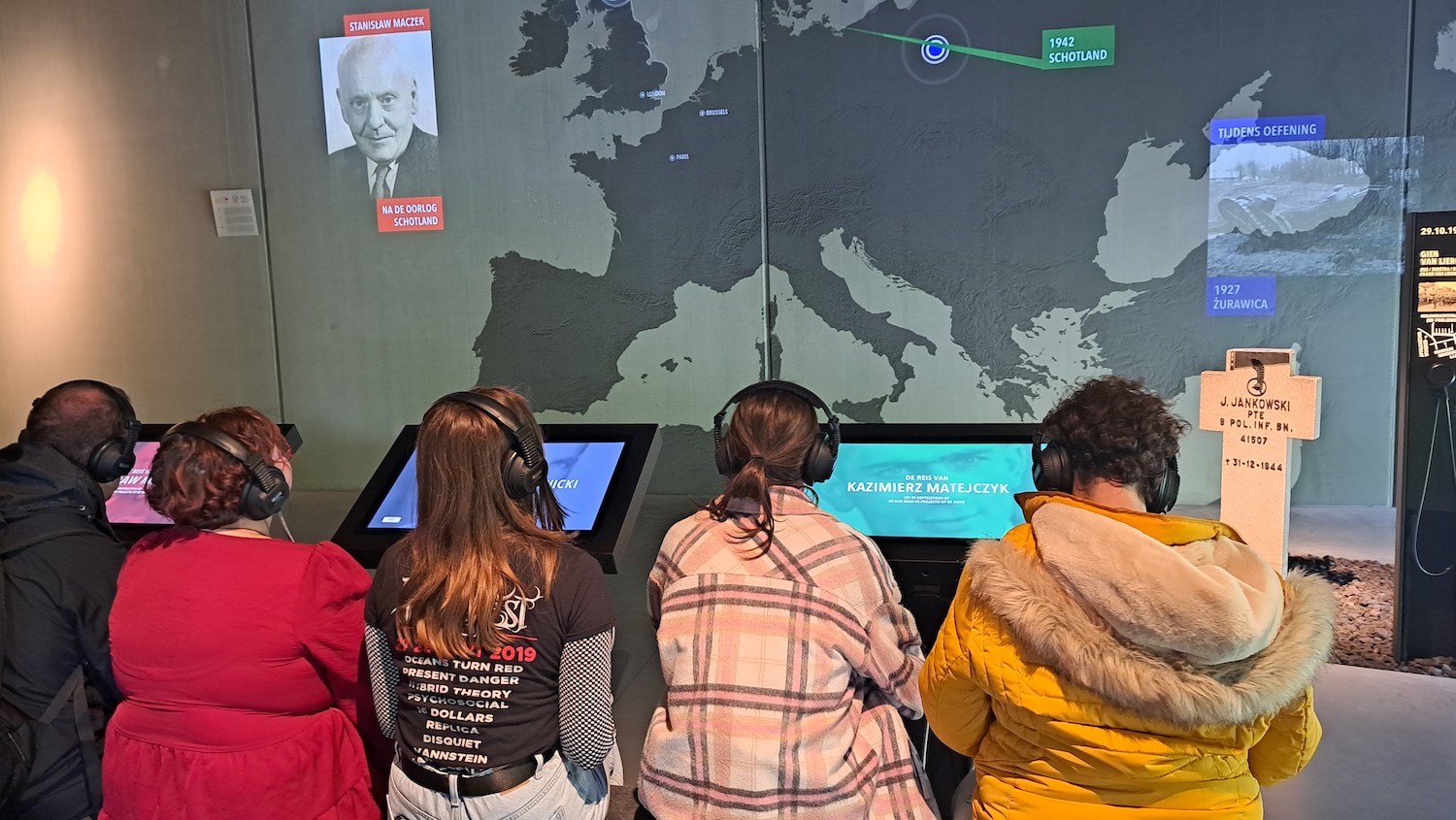
What was apparent in the two museums was that images, sound and buttons to set things in motion were highly appreciated. Dosage, however, proved important: the interactive exhibitions in Het Markiezenhof caused overstimulation because numerous actions started to get mixed up because overenthusiastic use was made of them. We also saw some overstimulation with the large interactive map on the wall of the Maczek Memorial: being able to follow the life histories of various people through headphones was judged very positively, but having to look at the large screen for other parts of the story at the same time was perceived as confusing and ‘too much’.
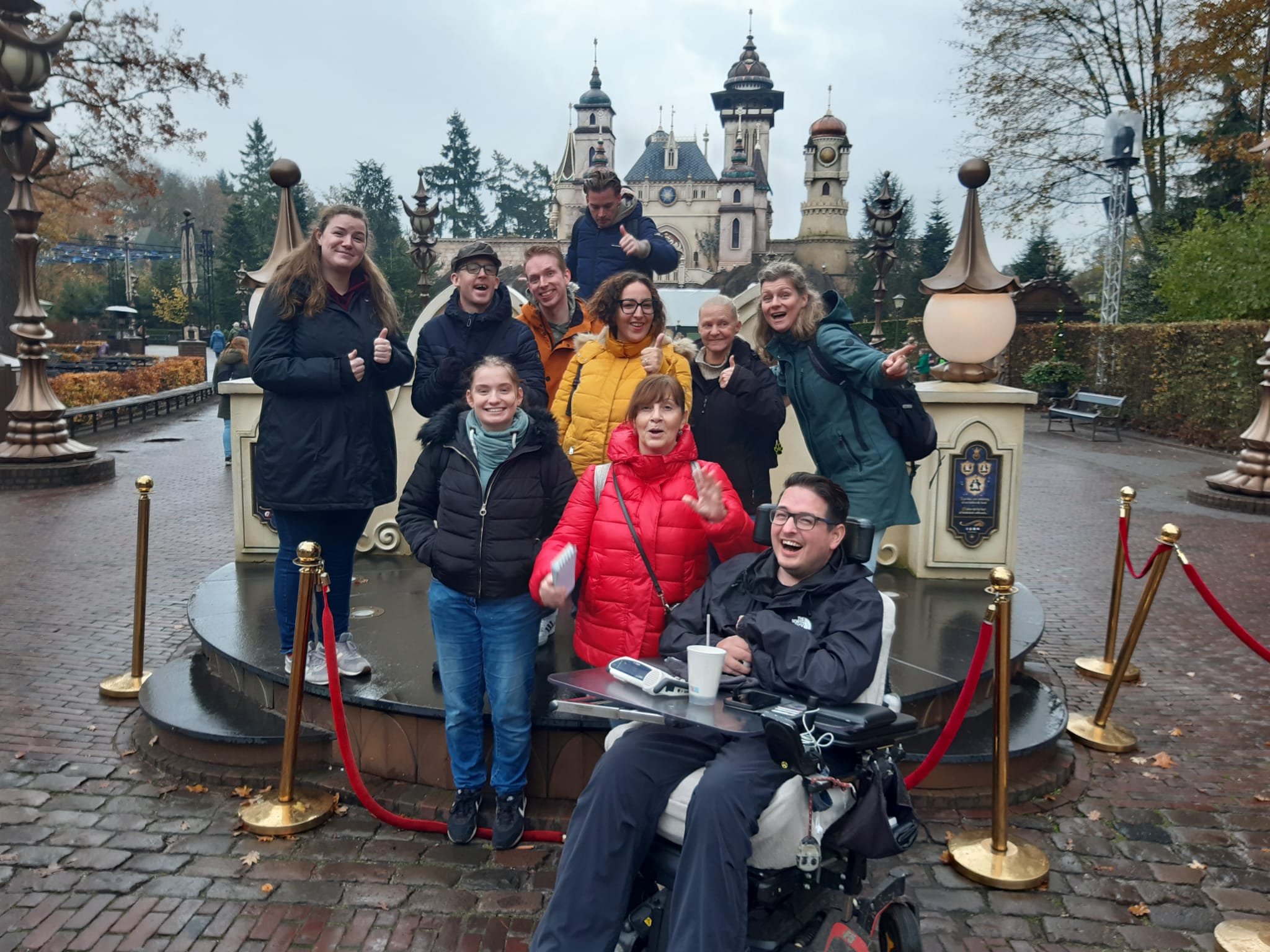
The logic behind some unwritten rules and customs in museums is not always clear. The attendants in the halls of Het Markiezenhof was felt by some to be unpleasant. Someone in the corner who keeps looking at you - what is such a person doing there? There is an opportunity here to have attendants act more like hosts or hostesses, especially if the very design of an exhibition calls for deviant behaviour - for example, if you were taught not to touch anything in a museum, but suddenly you are allowed (or even required) to do so in order to activate interactive experiences (such as in the period rooms of Het Markiezenhof). Even if a map app is unclear, a proactive, welcoming attendant can provide clear added value for this target group.
Shocking exhibition
Experiential experts indicate in evaluations that they are often "sucked into an experience". Mirroring their own context often means that sudden twists in stories or experiences that may not be appropriate in their own lives cause them to disengage or be overcome by emotion. We saw this at Het Markiezenhof, where an experiential expert could not comprehend the marquise's choice to give up her child. "I’ve just become a mother myself; you don't do that. I was done with it," she said. She said she also recognised this when watching films or series, for example. This may be a point of attention for designers of exhibitions with elements intended to be confrontational. It was suggested that some advance warning or framing would be welcome.
Communicate understandably and tactfully; certainly do not talk over people's heads to address their ‘attendant’ instead.
Attraction parks
We paid a visit to Bobbejaanland and Efteling.
Unclear or incomplete information
The LFB experiential experts indicated that the information on theme park websites is not always clear or complete. Many parks have information about accessibility, but the amount of information can be confusing there. Information about navigation in the park is also a concern: it is assumed too easily that a map is clear enough to find one's way around. We were able to observe the struggle several times; experiential experts indicate that a park map is difficult to understand, a map app (such as Efteling's) often does not have a read-aloud function, but that audio instructions with a navigation app can help well.
A new park map was created for Bobbejaanland by students for people with disabilities, with clear routes and an overview of accessible attractions and zones with hardly any stimuli.
Hospitality training
Hospitable staff can mean the difference between a great day or a big disappointment - even if accessibility is not perfect. Unfortunately, staff at parks are not always trained properly, making people with disabilities feel unwelcome. For example, "one of us (in a wheelchair) could do the virtual tour at Droomvlucht. We called, but no one came . After several times, an angry employee turned up. And to make matters worse, the virtual experience was not working. What a huge bummer!" An experiential expert had this tip: "It’s very important that staff know how they should treat us. Our emotions can be intense. Several times I saw someone go 'over the edge' because she didn’t feel understood or helped." Things go wrong, sometimes do not work, or are not always feasible, and people with disabilities really understand that. However, communication should be understandable and tactful; you certainly should not talk over people's heads to address their ‘attendant’ instead.
City tours
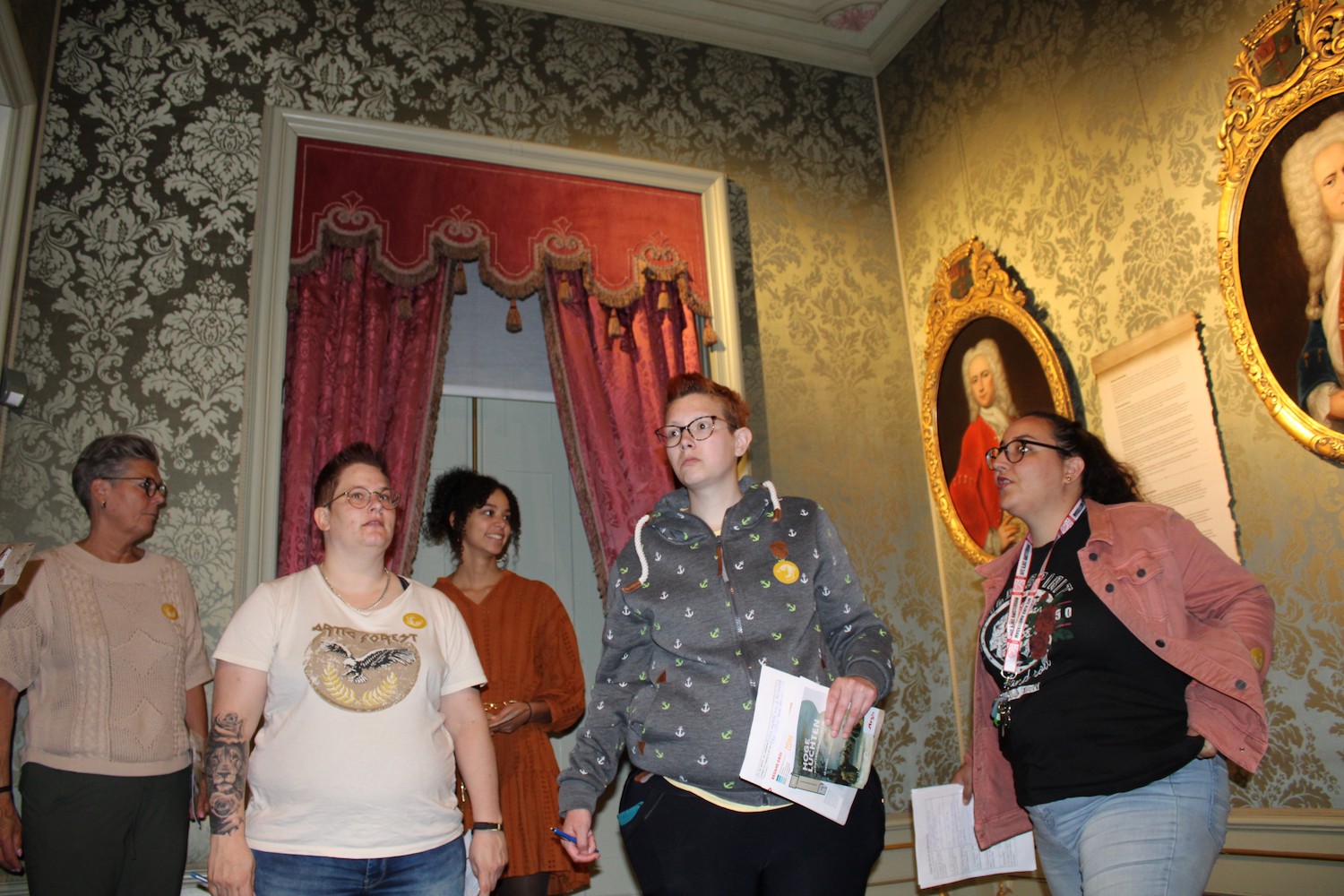
We took two city tours: a bike tour along various monuments to commemorate the liberation by General Maczek’s Polish armoured division, and a walking tour of the Blind Walls Gallery.
Bike tour along Maczek monuments
Most experiential experts in the group were able (although at very different paces) to move from monument to monument by bicycle or mobility scooter. One participant, however, could only really participate with a duo bike, but renting one in Breda for a day out proved very difficult. Eventually, he was able to come along by car, but that required adjustments to the tour because numerous places did not have a parking spot within short walking distance. In this case the guide was able to connect well with the group, skillfully using appropriate language and alternating between text and visual material.
Walking tour of Blind Walls Gallery
Street art on blind walls is, in principle, a great way of making a city more attractive. However, making that art truly accessible to people with disabilities requires extra attention. Finding the murals based on the available maps proved confusing. Instructions on how to get from one location to another and synchronisation with GPS locations were unclear. And then paintings also frequently turned out to be hidden in alleys. In addition, if the view of the paintings is partially blocked by cars or street furniture - perhaps unavoidable in a busy city - it makes for a less impressive experience.
Looking ahead: working on really accessible leisure experiences
We see that the leisure sector is making efforts to become accessible to all, but also that there is still work to be done, as evidenced by the above items to be addressed. It is often about small things that do have a lot of impact. In addition, it is not only about the leisure experience itself, but also what happens before and after. Simplify the physical and emotional route to and from the location: many do not have their own transportation, have intellectual as well as physical disabilities, or have difficulty travelling by public transport owing to fear, lack of clarity, overstimulation, a limited network and financial resources. Also look critically at ‘exit options’; can people with disabilities leave quickly in case of emergencies, for example.
In Breda, we emphatically look ahead. Together with the organisations Breda Gelijk and Breda voor Iedereen, we want to work towards an inclusive city in which equality, belonging and participation are the norm. Breda has expressed the ambition to win the Europe Access City Award again in 2030. Therefore, we want to build a community together with experiential experts to work with BUas students to realise Breda’s ambition in various fields, such as public spaces, festivals, hospitality, digital platforms, and so on - in a structured and sustained manner.
Our thanks go out to
- The experiential experts of the LFB Sterkplaatsen Goes, Rotterdam, and Utrecht.
- The BUas students of the tracks Urban Life & Placemaking, Performatory, Attractions & Theme Parks Management, and of Bachelor Leisure Studies.