The European classroom of Urban Life and Placemaking
Live like a local, act like a professional

Leisure & Events Management students at BUas can opt for the ‘Urban Life & Placemaking’ (ULP) track. ULP uses events and leisure activities to help students develop and enrich cities, making them liveable and loveable. It encourages student participation in city event design and social interventions. ULP has an international perspective, learning from examples abroad and exposing students to the experiences of people with very different backgrounds. As part of ULP, students spend a semester (30 ECTS credits) in a European city with a small group of peers. This part is known as ‘Living in the City’ (LITC).
Andrew Shaw and Simon de Wijs are involved in the design and teaching of the Urban Life and Placemaking programme at Breda University of Applied Sciences
Living in the City
LITC is one of the USPs of the ULP track. For the LITC programme students move to a European city for twenty weeks to live, study and work. They will apply their BUas insights and knowledge in their new hometowns. The list developed for the specialisation does not contain the typical capital or tourist cities like Barcelona, London or Rome, but cities with a smaller scale and different profile. In the last two years students lived in small groups in Bilbao, Leipzig, Porto, Sevilla and Turin. Other options on the list for students to choose are, for example, Cork, Varna, Thessaloniki, Krakow, Malmo and Toulouse.
The unique aspect is the combination of living, studying, and working. Although abroad, students still take their courses at BUas. The connection between the cities and with the BUas experts takes place via online Teams meetings (proven to be practical and successful during Covid times). This way, a European classroom is created with weekly classes to connect all the students (and cities) together. Besides the courses, there are specific city meetings and individual coach meetings and also a number of ‘coffee hours’ with a more informal ‘show, share and connect’ character. Near the end of the semester the lecturers will visit the students for a couple of days, and students organise their final activities of several courses during these days.
What’s innovative in LITC is that students do not purely complete an international placement, neither are they fully on an exchange to another university. In that regard LITC does not yet fit into the existing boxes. Students in a way do their placements ‘in the city’. During their stay in the cities, students are, on the one hand, challenged to become locals, and live in as well as connect to the city and local culture. On the other hand, they develop themselves as professionals by building a network, and by working on projects and/or a placement assignment.
The LITC courses in a nutshell
International Urban Scope
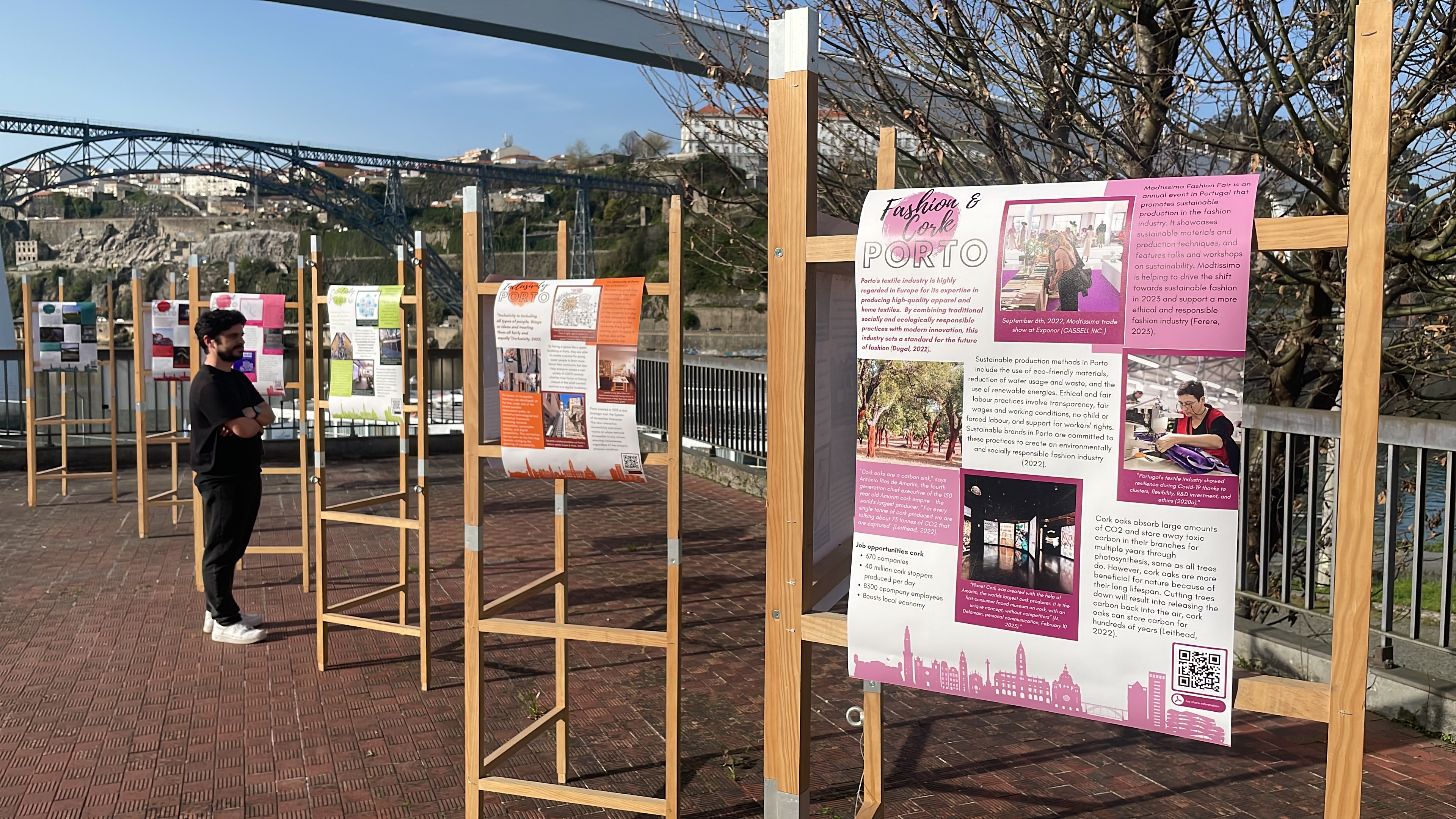
While actively working in the city, the students also explore their surroundings with a more academic lens. They take the themes they learned in the previous year, such as gentrification, inclusion, playfulness, mobility, and temporariness, and apply these to their new home city. They produce a poster exhibition, aimed at locals, where they show the visitors about their city through the lens of these urban scope themes. Being event design students, we challenge the students to organise the expos from A to Z (including production, arranging the space, marketing, budget, stakeholders). In Turin, the old advertising boards of the Precollinaer park tram route were repurposed for the exhibition. In Leipzig, a play on the practice of posting concert posters on building site hoardings led visitors on a tour around the city to experience the themes and locations. A more traditional exhibition took place in Bilbao, where students presented to Bilbao Metropoli 30 and other local civic stakeholders.
Social Intervention Project
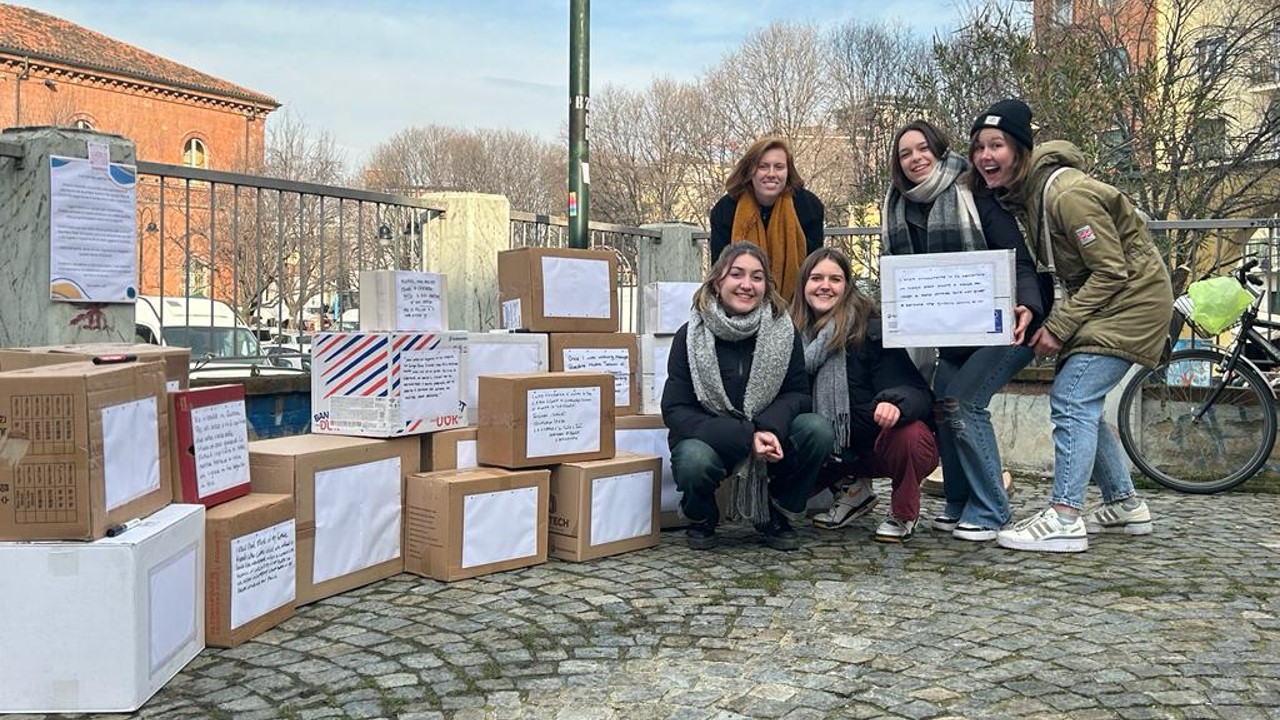
For this guided intensive project, students start by highlighting a local societal issue. The project involves mapping this issue and connecting with stakeholders to build their own capacity. Students work towards actually providing an intervention in the city that addresses the societal issue. This is based on the idea that to see change in a city, you need to make that change yourself. There have been a number of outcomes, from confronting activities relating to women’s feelings of safety in Turin, to starting the first tentative steps of community building in a physically and socially divided neighbourhood of Porto. Some interventions almost went un-noticed, yet had a measurable impact. In Leipzig, one group installed outdoor pantries for locals to safely display their unwanted goods that were too good to throw away. This modest action noticeably but quietly cleared up the streets of old vacuum cleaners, toys and clothes.
In the preparation phase, there are big hurdles to overcome, such as finding affordable housing and creating a professional network.
The research part of this course culminates in a hybrid international conference to share and compare the insights into and analyses of the global and local societal issue. What is the background to the issue? Which local stakeholders are involved? How does this affect the local residents? What is already being done in the city? The conference takes place both online and on campus in Breda. Alongside the students’ presentations, national and international experts in different fields (municipality of Breda, placemaking companies such as Aqui Barcelona and Stipo) also bring in workshops for the combined live and online audiences.
Professional Trail
In Professional Trail, students are challenged to find a placement company or to work as freelancers and do their own projects or voluntary work. Some placement companies where students worked in recent years are Happy Erasmus in Bilbao, co-working space Porto i/o, and placemaking organisation Stratosferica in Turin.
The freelancers choose a range of ‘challenges’ from a list, with the aim of pushing themselves to try new and potentially uncomfortable things. Some of the challenges include: cooking dinner with neighbours, cleaning the city, participating in local sports, growing vegetables through guerilla gardening, visiting a rival city, and conducting a mystery visit to a cultural performance. These challenges will help them to ‘become locals’ but also to ‘become urban professionals’. Just think of organising a small pop-up event in a public space, developing a creative tourism concept, or visiting a rival city and comparing both cities in a vlog.
Experiences up to now
For students, LITC is a life-changing experience, both personally and professionally. The students gain important cultural insights into their cities, acting as locals rather than visitors, and focusing on living, not just working in the new cities. Importantly, they see different forms of life. Often these students come from small villages and towns and find themselves in much larger, but still ‘second-tier’ European cities. They are sometimes exposed to societal issues that are much more prominent than back home, and they come to understand what it is to be an outsider in a culture, giving them an important insight into the experience of newcomers to their own countries.
In the preparation phase, there are big hurdles to overcome each time, such as finding affordable housing and also finding and contacting professionals for placements and projects. As LITC has been running for several years, the collective experience and our European network are growing with each group and each project, and these challenges become easier to tackle.
Our third edition of LITC will take place together with students from other BUas programmes (Built Environment and Social Innovation). We hope to expand this methodology, as we feel it is applicable to a number of interdisciplinary studies and collaborate with local partners across Europe to give the students a softer landing and dive into the local societal issues from the moment they arrive.
Being event design students, we challenge the students to organise the expo from A to Z for stakeholders in their city.
Our main takeaway from this LITC programme has been that challenging students to tackle difficult yet rewarding tasks, and trusting them to shape their own educational journey leads to deeper learning. When students go out and try ideas in real life, especially in another culture, they understand just how difficult it is to achieve their goals, which gives them a renewed respect for all of the amazing work that local stakeholders are doing and are successful in.