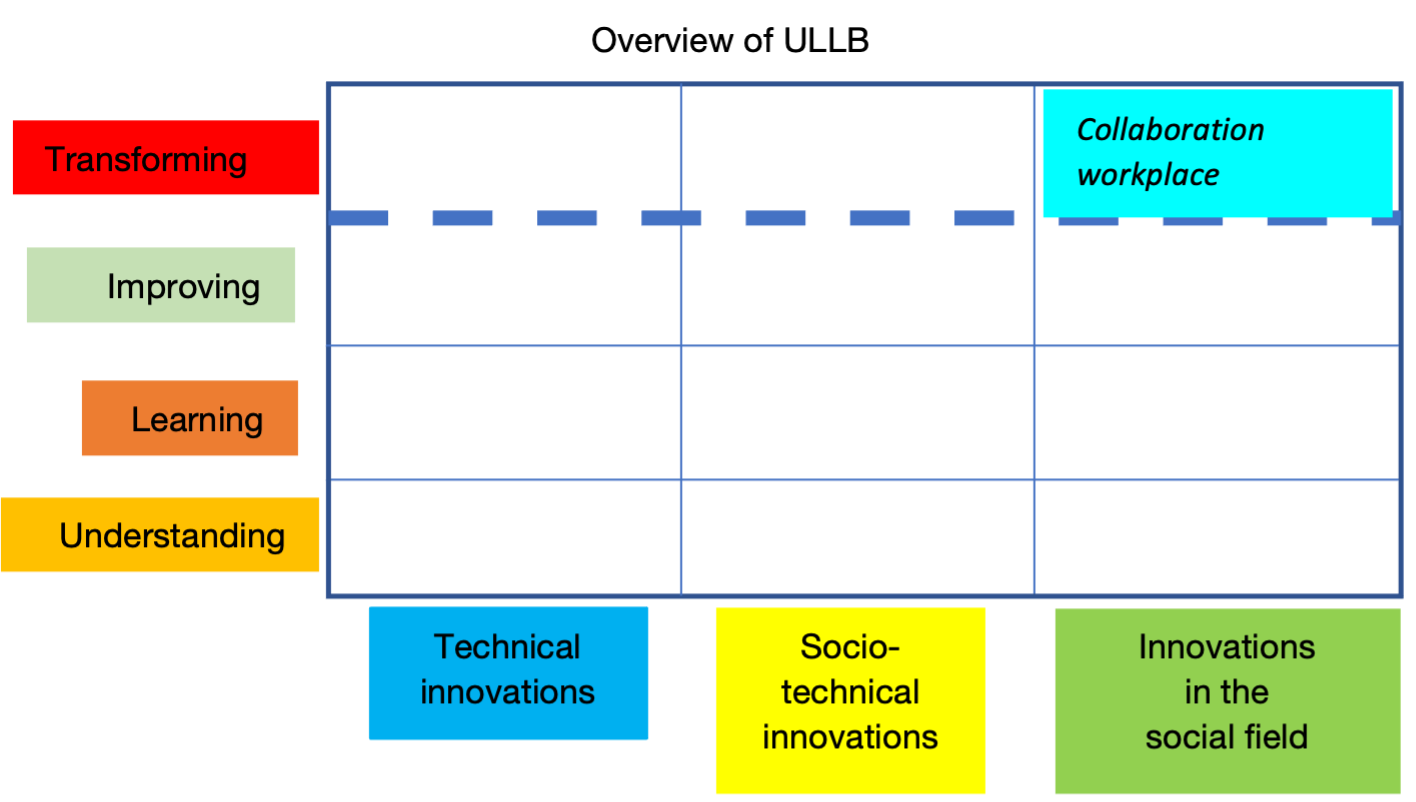
Collaboration workplace enhances the transformative capacity
The library as an engine for sustainable inclusive district development

The collaboration workplaces (Samenwerkplaatsen) of the ULLB sees direct involvement of residents in their own living environment as a prerequisite for sustainable, inclusive development. Leisure practices, such as the ones in the new library, provide an opportunity to support the transformation of the role of residents in the social playing field.
Ger Pepels is involved in the Urban Living Lab Breda (ULLB) on behalf of Breda University of Applied Sciences.
ULLB and resident engagement
The voices of residents are represented less strongly in conversations about urban development. As a resident, you can cast your vote your opinion, and then it is up to local politicians to represent that vote. According to ULLB, this representation is inadequate to achieve a justifiable, inclusive, and sustainable transition. Therefore, ULLB involves residents in projects. The way in which they do so varies from project to project, for example, ranging from the learning-oriented development of socio-technical innovations like the Zelfbewuste Huis (Self-Aware House) to the Collaboration workplace focused on profound transformation of relationships.
Addressing challenges in the district
ULLB has worked together with collaboration workplace in the Hoge Vucht district as from 2020. This district regularly receives negative publicity, residents are far removed from institutional parties that want to contribute to the liveability of the neighbourhood, and the level of organisation of residents themselves is low. In the 2021 report Segregatie in Breda (Segregation in Breda), the Breda audit office substantiates the failure of local policies and the growing dichotomy in the development of neighbourhoods. The challenges in the fields of socio-economic position, housing, participation, well-being, and health are most severe in the neighbourhoods of Hoge Vucht: Geeren-Zuid, Geeren-Noord, Biesdonk and Wisselaar.
This issue does not only arise in Breda. With the 2022 National Liveability & Safety programme, the national government indicates its intention to give long-term and substantial extra impetus to twenty districts in the Netherlands.
The residents themselves have not been heard when choices were made for and translated to their neighbourhoods.
In line with this, Breda is developing theVerbeter Breda (Improve Breda) programme. On 19 April 2023, a large group of institutional players signed Pact 3, the implementation programme. The focus on housing, liveability, safety and youth development is obviously relevant, and compared to the regular neighbourhood approach, residents are involved in the development of Verbeter Breda more directly and to a higher degree.
Still, it is important to note that the residents themselves living in this district have not been instrumental in making choices for and translating them to their neighbourhood. Therefore, even though the programme aspires to give residents a stronger voice, "residents see it as yet another programme that has been developed top-down,” said the chair of the district council.
Working based on ABCD
- Collaboration workplace Hoge Vucht wants to contribute precisely here by strengthening the residents’ voices and, to this end, works on the basis of Asset Based Community Development (ABCD). The residents’ say and working from the residents’ strengths and assets are central to this. These assets/sources of power include:
- residents’ individual qualities
- their formal and informal collaborations, e.g. Foundation Hart (Stichting Hart) at Breda Noord, La Femme Vitaal, football club Advendo, children’s farm Parkhoeve
- availability of social amenities, such as the collaborative building societies 1 Team Hoge Vucht
- public areas (outdoor areas, community centres)
- the shared stories (‘It is pleasant to live in the neighbourhood’)
- the range of shops (Hoge Vucht shopping centre) and businesses
Based on the ABCD philosophy, it is up to residents to decide what goals they want to use the power sources for. In the past three years, residents have emphasised housing ('no more social rent'), (traffic) safety, greenery and, above all, meeting people as priorities. In a more general sense, those priorities correspond to the focus of Verbeter Breda, but, as mentioned, in Verbeter Breda the direct involvement of the residents concerned is of secondary importance.
However essential this involvement may be, achieving it is especially challenging. Leisure practices pass by in the collaboration workplace Hoge Vucht: small events with resident involvement (New Year's drinks, WIEK tour) entice people to go outside and encourage encounters. The realisation of these initiatives repeatedly shows that the organisational power of Hoge Vucht residents is still limited. Many residents have other, everyday priorities. They have largely lost faith in institutions and are looking for solutions to their personal problems themselves.
As challenging as that step is, however, it is also essential. How can residents become more and actively involved in strengthening the liveability of their neighbourhood?
The library returns
The local authorities decided to close the library in the district in 2013, much to the chagrin of many residents. Library North had a broad social function, offering social work consultation hours, the form filling service, and organised read-aloud events and activities for young and old in addition to the library facility. By 2019, the fact that residents missed their library had permeated politics and the motion to bring back the library received wide support in the city council.
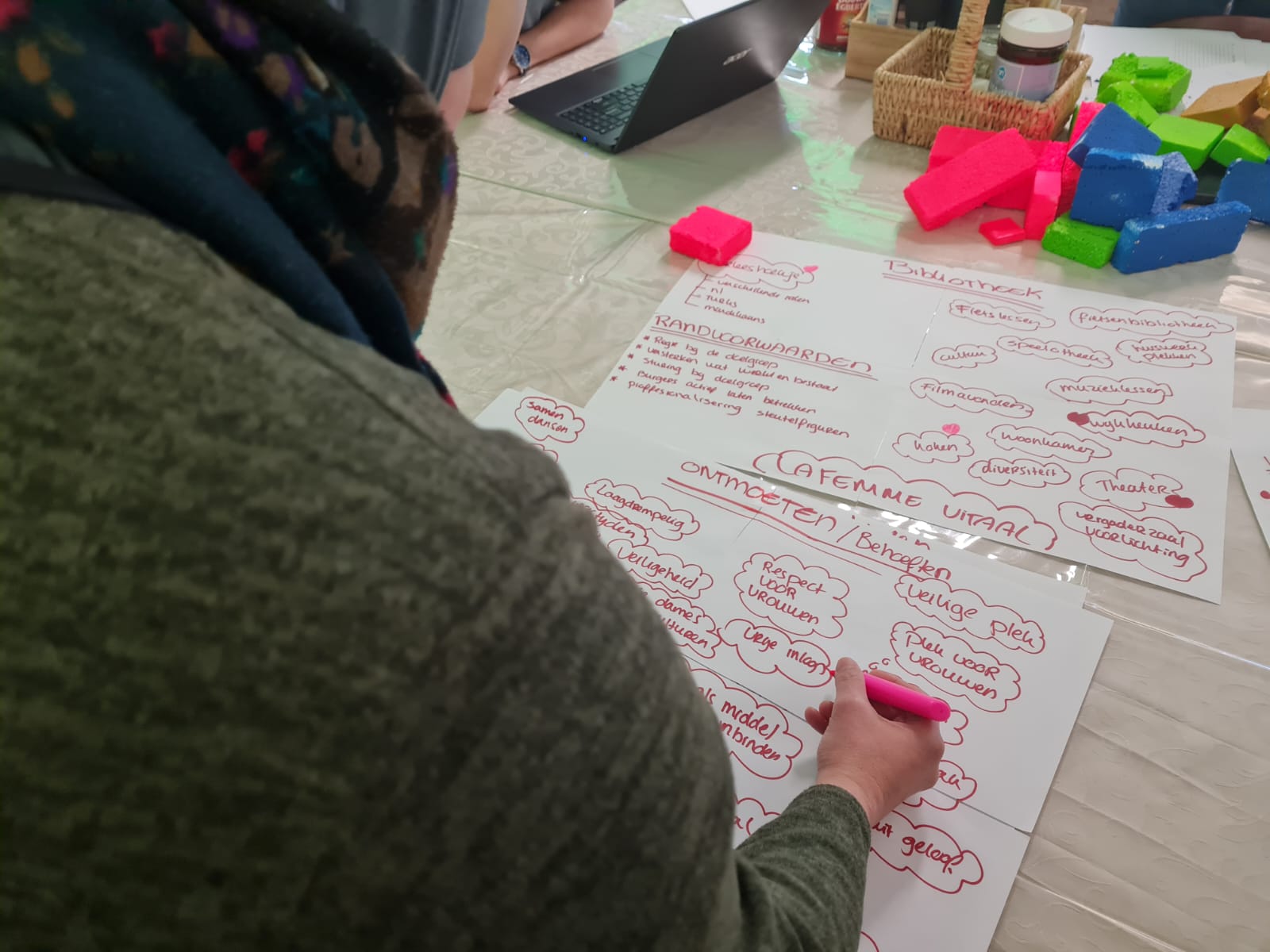
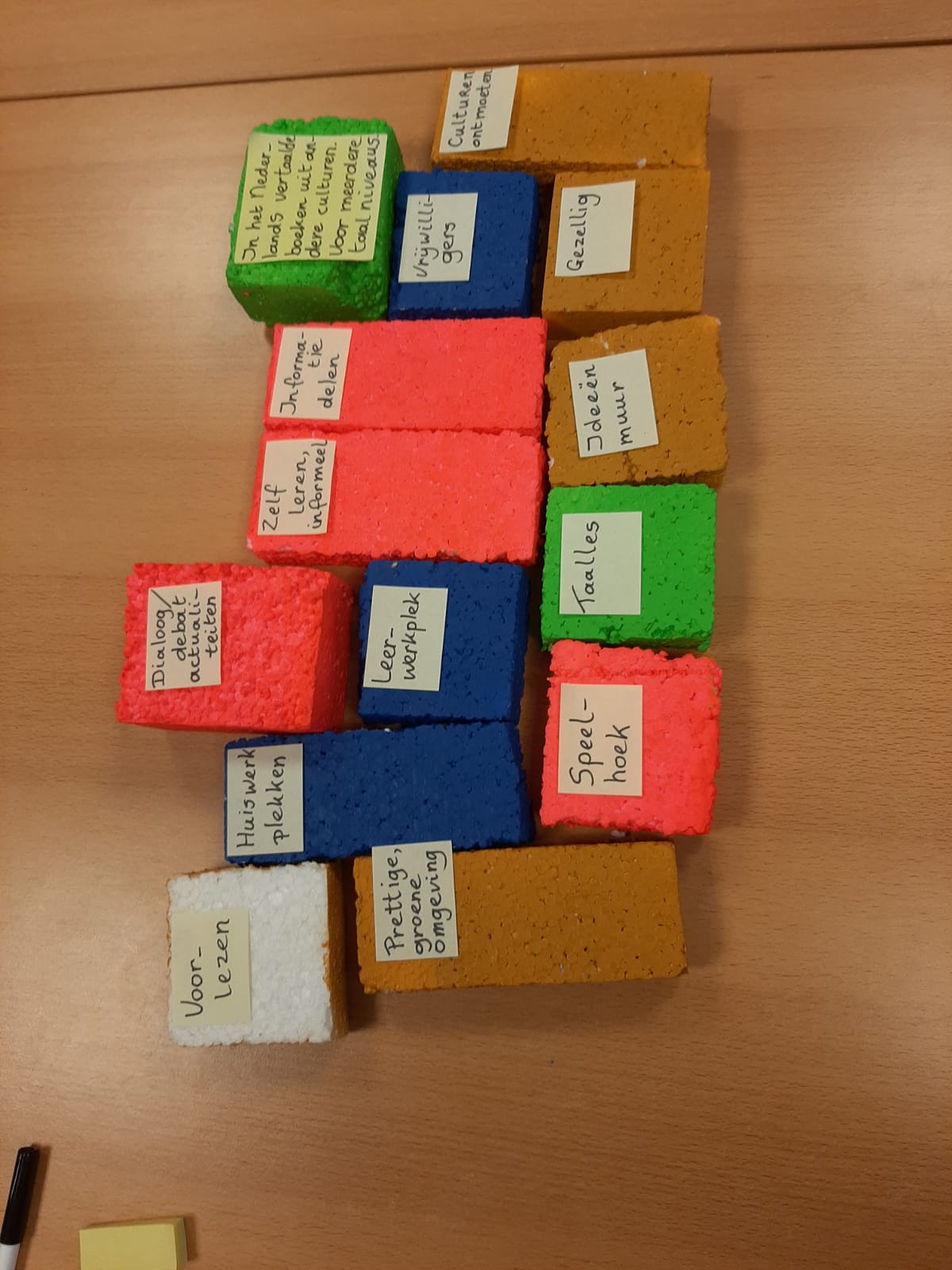
From earlier conversations of collaboration workplace Hoge Vucht with residents, ‘meeting people’ appeared to be a core need. For residents, the library has multiple functions, with the traditional library function being only one. Besides borrowing books, residents think that access to study or work areas, learning or developing, and easily accessible opportunities for meeting people outside their own circle are essential functions of the new facility. Residents also connect the library with pride in their neighbourhood and even enhancement of the neighbourhood's image beyond their own borders.
In the 2022 coalition agreement, the political desire was turned into a reservation of three million euros for the new library facility in the district, with a connection made to the Verbeter Breda programme in formation as well.
Residents determine what power sources will be used for what purposes.
The municipality approached the district council requesting them to play an active role in the reintroduction of the library, starting with mapping out residents' needs. To this end, the district council together with collaboration workplace Hoge Vucht, organised exploratory trips to Permeke in Antwerp, the cultural facility Theek 5 in Baarle-Hertog, district library Delfshaven in Rotterdam, Bouwlust in The Hague, Nieuwe Veste, and the new cultural centre De Nobelaer in Etten-Leur. In addition to municipal councillors, neighbourhood professionals, officials and administrators, the residents took part in the exploratory trips. This provided inspiration and deeper insights into the wishes of residents.
In spring 2023 the district council and collaboration workplace Hoge Vucht conducted additional interviews with groups of residents (the elderly, Moroccan women, around both mosques, and Stichting Hart van Breda Noord). This additional research confirmed earlier lessons about the importance of meeting and connecting:
"Those (meetings) add tremendous value to the neighbourhood. It brings people together. Think of the example in Antwerp as well. The library ‘went outdoors’ about a hundred times a year, to other public spaces. Make sure there’s a programme.”
The library will need to serve multiple functions. It is essential to determine in dialogue what makes ‘the library a library’ of this neighbourhood and who should be involved in it in what way. This plurality of functions requires the involvement of other actors than just experts from the library.
Transforming to sustainable, inclusive organisations
Developing a library that contributes to a sustainable, inclusive society requires strong involvement of the neighbourhood community. By participating in the development, residents step into the pluralistic social playing field and make their voices heard. Taking that step is not easy in practice. For example, the group of active residents in Hoge Vucht who want to take up this challenge is still small. The trips, individual and group discussions, and articles in the district newspaper Koers are now generating attention. An early trust that the library will return is budding. The first residents willing to participate are now signing up. The hope is that the realisation of a pop-up library will accelerate this process.
The municipality's invitation to residents to take an active role is a major step in exploring ways in which residents, municipality, social organisations, and businesses can work together in new ways. Collaboration workplace Hoge Vucht is going to organise a social learning process to thus contribute to the transformation of neighbourhood governance.