Introduction Uncover 7 The Future of Leisure
We challenge you to design the Future of Leisure!

We live in turbulent times. Awareness of the threats of war, pandemics, and economic recessions make reconsiderations urgent, also within our leisure field. Which structures are resistant under which conditions? What is important or valuable? The outbreak of the global pandemic and the resulting restrictions on leisure pursuits exposed the impact of our industry on the functioning of society. The lack of the previously seemingly taken-for-granted interpersonal interaction, relaxation, inspiration and entertainment has made impacts whose full implications are yet to be seen. Despite that, the leisure sector remained remarkably quiet for a long time. Beyond practical solutions and the occasional cry for help for the sector’s survival, we took the inspirational leader role only to a limited extent. Perhaps overwhelmed by the visibility of this responsibility. Perhaps we did not sufficiently feel the urgency to claim our role in society. A missed opportunity to take a step forward to expand the full potential of leisure for social, environmental and economic impact. The Future of Leisure largely depends on the role leisure manages to claim in the vital issues facing society. Are we sufficiently capable of demanding the role as a testing ground and as connector between the lifeworld and systems world?
This year the four universities in the field of Leisure and Events united to explore these issues and challenges. Breda University of Applied Sciences hosted, together with NHL Stenden (Leeuwarden), Inholland (Diemen) and Willem de Kooning (Rotterdam), the Uncover conference Future of Leisure, with more than 300 participants. Students, lecturers, researchers, experts from profit and non-profit organisations, policy-makers and target groups joined to design and shape this future role together. Showcasing leisure as a laboratory. Using leisure as the engine to create movement to guide society towards potential and desired development
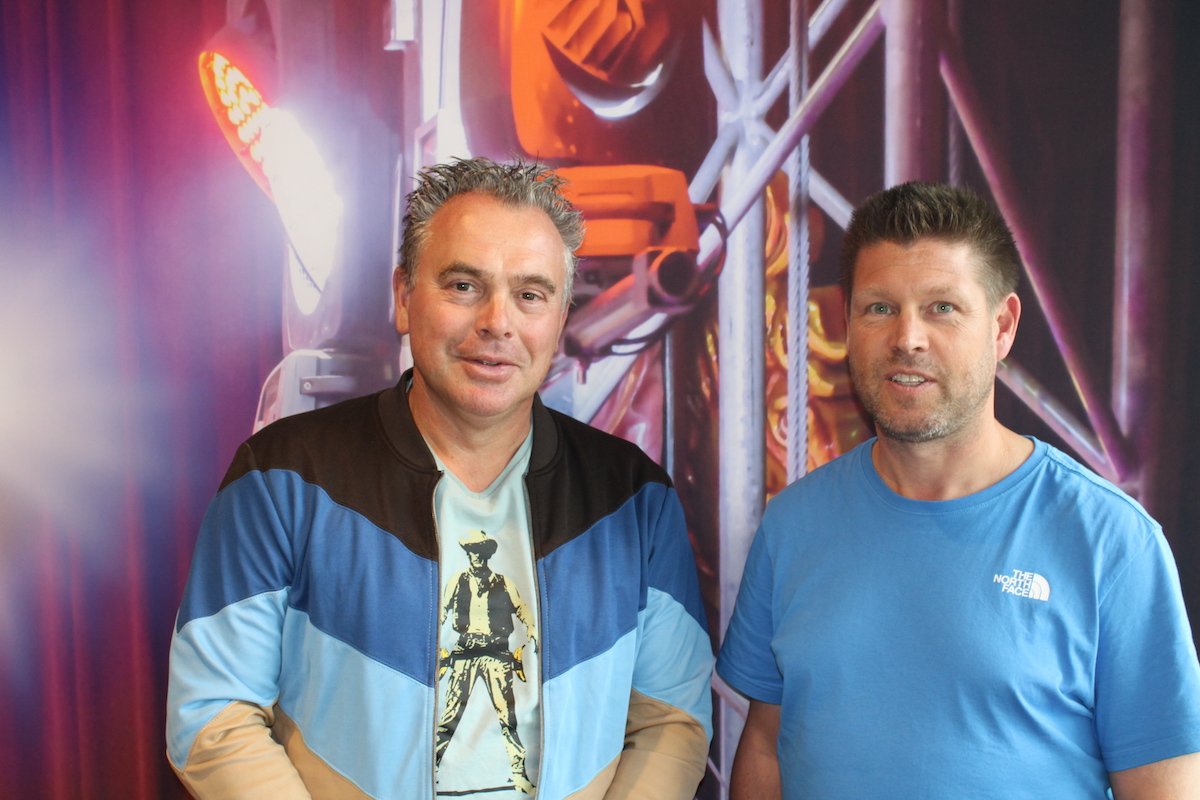
Peter Horsten & Simon de Wijs are the final editors of Uncover.
What will the future look like? Based on technological capabilities, are we going to have more and more processes performed by robots? A bed-making machine for hotels? Or will the desperate need for workers also open our eyes to the fact that there is a large untapped potential and therefore a more inclusive labour market in which everyone participates becomes a reality? In order to become carbon neutral, will we see more cities banning large events or will this sector succeed in becoming fully circular or perhaps even regenerative, creating space to host more events to save our world. Will competition for space put pressure on leisure facilities or will increasing density in cities intensify the need for a 15-minute city? The point is not so much to predict all this but to recognise the circumstances and developments under which this may happen. Which direction is desirable? How should we deal with such developments? What alternatives exist? And how to design our leisure infrastructure from that context?
It’s time to take the stage. Join the movement!
The conference
The Future of Leisure conference got off to a spectacular start with a cinematic future perspective on leisure outlined by Artificial Intelligence, followed by various keynotes and videos. Professor Ian Yeoman kicked off, explaining how science fiction can offer insight and how we can explore future scenarios. We then looked at potential change through leisure from four perspectives: inclusivity, placemaking, sustainability and technology. Milan Meyberg, drawing on his experiences in the event sector and eco-resort Basecamp, took us through how we can move from a linear to a regenerative leisure industry. Towards a world where nature is not used but is given a voice and becomes a cooperation partner.
For the other perspectives, the framework was outlined through several videos, including Greg Richards, Professor of Placemaking and Events, who sees leisure as time and space to improve people’s quality of life, and Rabin Baldewsingh, National Coordinator against Discrimination and Racism, who argued that within an inclusive society, bonding and bridging are key elements and leisure plays a key role in that.
In the afternoon, in mixed groups, participants explored - from the four perspectives - how the qualities that characterise our leisure sector (playfulness, entertainment, humour, hospitality, social connection, creativity, imagineering and storytelling) provide a breeding ground for a suitable context in order to solve the complex issues and challenges we are facing as a society.
Throughout this magazine you can read more in-depth stories and results from the conference. We have made a beginning to harness the power and impact of leisure for the future.
You are warmly invited to continue with us on this path!